Coloured PMMA is replacing conventional coating for selected exterior components of the Volkswagen ID. Buzz. The solution from Röhm provides the required Class A surface quality while supporting resource-efficient production through the elimination of subsequent coating.
Opaque colour without coating: Plexiglas moulding compounds fully coloured in deep black enable the resource-efficient production of high-gloss plastic components using the mould-in-colour process. The rear spoiler and wingflaps on the Volkswagen ID. Buzz. are just two examples.
(Source: Volkswagen)
Decarbonisation is a major issue in the European automotive industry. It is not just about the power train, but about cutting carbon emissions across the entire vehicle life cycle, including material selection and production. Even minor interventions can help to reduce the carbon footprint — like the mould-in-colour (MIC) process in the injection moulding of car body parts and interior trim panels. Using fully coloured plastic granules removes the need for coating. What is more, specific material properties such as UV resistance and surface hardness eliminate the need for protective coating later on.
Demand for mould-in-colour solutions
Eugen Fichter, Global Senior Product Manager in the Moulding Compounds business unit at Röhm, shares his experience: “Our automotive team noted huge interest in mould-in-colour solutions at the K trade fair for plastics. After all, sustainability requirements in automotive engineering are increasing — both from a consumer perspective and due to regulatory demands.”
Gallery
Plexiglas moulding compounds deliver matching solutions: Not only is the branded polymethyl methacrylate (PMMA) from Röhm available in crystal clear and transparent coloured versions — it also comes in a wide variety of opaque colours. In addition, the material offers exceptional UV and weather resistance and can be processed using all thermoplastic methods.
Automotive manufacturers around the world value Plexiglas as a material for exterior car body parts with Class A surfaces. Röhm developed the Black 9V022 colour, reminiscent of piano lacquer, specifically for this purpose. Volkswagen also uses deep black coloured Plexiglas moulding compound, including for the pillar trims, the large front emblem, rear spoiler and wing flaps of the ID. Buzz, the reinvention of the legendary VW Transporter (Type 2).
“Apart from transparent components for vehicle lighting, we mainly use Plexiglas moulding compounds for high-gloss parts in black,” explains Eckart Herrmann, responsible for exterior material development at the Volkswagen brand. “Plexiglas is a mould-in-colour material that can be adjusted to an extremely deep black. The components look incredibly classy with their perfectly smooth surface.”
Volkswagen is positioning the ID. Buzz and the ID. Buzz Cargo — the first two fully electric models in the Volkswagen Commercial Vehicles brand — as attractive flagships for modern mobility, with electric drives and a comprehensive sustainability concept for materials and processes. “Sustainability is a priority when selecting materials,” emphasizes Herrmann. He points to the new End-of-Life Vehicles Directive, which is scheduled to enter into force in the European Union in 2026 and requires a recycling concept for every plastic component in a vehicle.
“Vehicle manufacturers now have to navigate the complex balance between recycling requirements, functionality, aesthetics, quality and costs. Long-term quality is key if you want a car to look good not just in the showroom, but throughout its entire service life with the customer,” emphasizes Herrmann. Every Volkswagen model is therefore required to pass a two-year outdoor weathering test in different climate regions, including extreme conditions with strong UV radiation exposure.
Component longevity is one factor, cost-efficient and resource-saving manufacturing another. “At Volkswagen, we are steadily reducing carbon emissions during the manufacture of our vehicles,” says Herrmann. “Life cycle assessments draw on tens of thousands of processes in the manufacturing phase to calculate the global warming potential according to the DIN EN ISO 14040/44 standard.”
Coating is expensive and consumes a lot of energy
Mould-in-colour offers relevant savings potential, as coating is a significant driver of energy consumption and costs in automotive engineering. Volatile organic compounds (VOCs) are released during the coating process, while the heat required to dry the coating consumes a lot of energy. Depending on the design of the coating system, it may also use considerable quantities of water, which then requires downstream treatment — a process that itself consumes a lot of energy.
Date: 08.12.2025
Naturally, we always handle your personal data responsibly. Any personal data we receive from you is processed in accordance with applicable data protection legislation. For detailed information please see our privacy policy.
Consent to the use of data for promotional purposes
I hereby consent to Vogel Communications Group GmbH & Co. KG, Max-Planck-Str. 7-9, 97082 Würzburg including any affiliated companies according to §§ 15 et seq. AktG (hereafter: Vogel Communications Group) using my e-mail address to send editorial newsletters. A list of all affiliated companies can be found here
Newsletter content may include all products and services of any companies mentioned above, including for example specialist journals and books, events and fairs as well as event-related products and services, print and digital media offers and services such as additional (editorial) newsletters, raffles, lead campaigns, market research both online and offline, specialist webportals and e-learning offers. In case my personal telephone number has also been collected, it may be used for offers of aforementioned products, for services of the companies mentioned above, and market research purposes.
Additionally, my consent also includes the processing of my email address and telephone number for data matching for marketing purposes with select advertising partners such as LinkedIn, Google, and Meta. For this, Vogel Communications Group may transmit said data in hashed form to the advertising partners who then use said data to determine whether I am also a member of the mentioned advertising partner portals. Vogel Communications Group uses this feature for the purposes of re-targeting (up-selling, cross-selling, and customer loyalty), generating so-called look-alike audiences for acquisition of new customers, and as basis for exclusion for on-going advertising campaigns. Further information can be found in section “data matching for marketing purposes”.
In case I access protected data on Internet portals of Vogel Communications Group including any affiliated companies according to §§ 15 et seq. AktG, I need to provide further data in order to register for the access to such content. In return for this free access to editorial content, my data may be used in accordance with this consent for the purposes stated here. This does not apply to data matching for marketing purposes.
Right of revocation
I understand that I can revoke my consent at will. My revocation does not change the lawfulness of data processing that was conducted based on my consent leading up to my revocation. One option to declare my revocation is to use the contact form found at https://contact.vogel.de. In case I no longer wish to receive certain newsletters, I have subscribed to, I can also click on the unsubscribe link included at the end of a newsletter. Further information regarding my right of revocation and the implementation of it as well as the consequences of my revocation can be found in the data protection declaration, section editorial newsletter.
Materials specialist Herrmann draws on standard Volkswagen values to illustrate the magnitude of the issue: “Coating accounts for around 40 percent of the energy consumption in our vehicle production in Wolfsburg. Although coating the bodywork is responsible for most of that, mould-in-colour is a significant factor in reducing the carbon footprint attributable to plastic components.”
This option is factored into the equation right from the model development phase, provided that the mould-in-colour components create a harmonious look with the rest of the exterior design — like with the rear spoiler and wing flaps on the ID. Buzz. With their deep black, glass-like look, the Plexiglas components in Piano Black frame the dark-tinted glass of the rear windscreen.
High demands for aesthetics, UV resistance and chemical resistance
In this case, Volkswagen selected Plexiglas together with its supplier Magna, the development partner involved in designing the tailgate for the ID. Buzz. “We needed a high-gloss plastic that meets the most rigorous requirements with regard to aesthetics, weather and chemical resistance,” says Petr Staněk, Lead Engineer at Magna Exteriors (Bohemia). Chemical resistance is particularly important for the rear spoiler, as the component is fitted with an opening for the spray nozzle and comes into direct contact with windscreen cleaning agents. “The plastic’s compatibility with the mould-in-colour process was another criterion, as we wanted to avoid coating the surface.”
Production with injection compression moulding
The specialised company entrusted with manufacturing the rear spoiler and wing flaps for the ID. Buzz according to the Volkswagen and Magna specifications was also pleased with the material selection. “I have been working with Plexiglas moulding compounds from Röhm for around 20 years. The material is very high quality and easy to process,” confirms René Tillmann, COO at Finke Anwendungstechnik GmbH in Altenbeken.
Both the spoiler and the wing flaps are two-component injection moulded parts made from polycarbonate with a top layer of Plexiglas as a black, high-gloss finish. “With the rear spoiler measuring 1,222 by 155 by 44 millimetres, a two-component structure makes sense in order to obtain the necessary dimensional stability with the enormous wall thickness,” explains the plant manager.
Specialising in tool development and injection moulding technology, the company upgraded the mould-in-colour process into a multi-layered method. “We use an injection moulding embossing process with a three-part cube mould, in which a hydraulic ram compacts the PMMA moulding compound. This allows us to compensate for the material’s natural shrinkage while curing this very large component,” Tillmann explains.
The specialists from Finke Anwendungstechnik also devised clever solutions for other challenges: A special laser process is used to remove the sprue, while the opening for the spray nozzle is subsequently milled into the rear spoiler to ensure that the Plexiglas surface remains flawless — after all, the material’s UV, weather and abrasion resistance provide long-lasting brilliance and enduring value retention.



:quality(80)/p7i.vogel.de/wcms/b0/7a/b07a7095a06502f296a68cc23c0333fd/0133339310v4.jpeg "The positive trends experienced in the machine tool industry are continuing into the second quarter: incoming orders increased by 12 percent compared to the previous year. (Source: VDW)")
:quality(80)/p7i.vogel.de/wcms/4b/e2/4be222cca85fc9ccbdf26c552cfc3c4c/0132990447v1.jpeg "A research project highlights potential of high-quality material loops for cars. (Source: BMW Group)")
:quality(80)/p7i.vogel.de/wcms/55/47/55478646728684cec46485443d736f85/0132634476v1.jpeg "Geopolitical tensions and weak demand weighed heavily on Italy's machine tool industry (Source: free licensed / KI-generiert)")
:quality(80)/p7i.vogel.de/wcms/2f/7a/2f7ac201c1abc14dc40a30d947684069/0132348722v1.jpeg "The Nova5e110T, a latest-generation all-electric injection moulding machine, produces a food-packaging application using liquid silicone rubber injection moulding. (Source: Negri Bossi)")
:quality(80)/p7i.vogel.de/wcms/8e/25/8e2561d12b8caeba7125507a0c957e6e/0133564611v1.jpeg "Nexgem brings together companies from the worlds of mechanical engineering, IT and software. (Source: VDW)")
:quality(80)/p7i.vogel.de/wcms/48/a5/48a599231b179ed4c8f2fc4f00fc80ac/0133459364v2.jpeg "Fakuma 2026 will mark its 30th edition in Friedrichshafen from 12 to 16 October, with around 1,600 exhibitors from 40 countries, innovation awards, expert discussions and career initiatives. (Source: Fakuma)")
:quality(80)/p7i.vogel.de/wcms/13/22/13224a29676f9fba818db663bcc63729/0133443239v1.jpeg "That’s a wrap for another AMB in Stuttgart. In around two years, metalworking innovations will once again take centre stage in Baden-Württemberg. Here, the organiser and industry representatives reflect on this year’s event ... (Source: Th. Wagner / Messe Stuttgart)")
:quality(80)/p7i.vogel.de/wcms/9f/3d/9f3da0d0fff1def9de2203feda4fde5d/0133450626v2.jpeg "Taipeiplas 2026 brought buyers and exhibitors together for active business discussions. (Source: Taitra)")
:quality(80)/p7i.vogel.de/wcms/18/cb/18cbc67d9db9584a02e1cb87adeb4955/0133336478v1.jpeg "The Meusburger compact slide 1:1 E 6100 was specially designed for use in stamping. (Source: Meusburger)")
:quality(80)/p7i.vogel.de/wcms/50/12/5012028b260c3beee1f6e7058bd71d39/0133204757v2.jpeg "For the hydraulic connection of the cylinders Meusburger offers suitable fittings, screw plugs and flat-sealing hydraulic couplings. (Source: Meusburger)")
:quality(80)/p7i.vogel.de/wcms/4b/0a/4b0a16305af8bb26afeba230a64b94cb/0133087107v1.jpeg "At Fakuma 2026, Hasco will present new developments for tool and mould making. (Source: Hasco)")
:quality(80)/p7i.vogel.de/wcms/85/0a/850a63867131938c36290a2ffab91545/0132699768v2.jpeg "A key focus at Meusburger’s trade fair stand is the comprehensive range of plates and mould bases. (Source: Meusburger)")
:quality(80)/p7i.vogel.de/wcms/32/44/32440bdff907b379245f456130355549/0133341463v1.jpeg "Stratasys F870 FDM system, a large-format additive manufacturing platform designed for industrial manufacturers, automotive OEMs, aerospace & defense production lines, looking to scale production on the factory floor. (Source: Stratasys)")
:quality(80)/p7i.vogel.de/wcms/f6/6e/f66e3f322d7e2a8fe7e80f808c67e607/0133319745v2.jpeg "Formnext brings together the global AM community and showcases the latest innovations in industrial 3D Printing and advanced production technologies. (Source: Mesago / Marc Jacquemin)")
:quality(80)/p7i.vogel.de/wcms/13/15/13156077bb6086d11a98b5375da5e858/0133159292v2.jpeg "Quickparts runs production through both its own in-house facilities and a certified network of manufacturing partners across North America, Europe, and Asia. (Source: Quickparts)")
:quality(80)/p7i.vogel.de/wcms/b2/2b/b22b2227432aa36f4e4a52349ce2da5d/0133002892v1.jpeg "he serial production of spare parts within GMH Gruppe marks the beginning of point for ProMateria’s next phase of development. (Source: GMH Gruppe)")
:quality(80)/p7i.vogel.de/wcms/24/07/2407a4874f3c763937892a12e3e7d125/0133564963v2.jpeg "(Source: Walter)")
:quality(80)/p7i.vogel.de/wcms/03/8e/038ec919753fabff71f6e3473c772f74/0133130761v2.jpeg "The core reason behind the adoption of humanoid robots in the manufacturing or tool and mould making industry is the lack of labour in these markets. (Source: © Maksudul - stock.adobe.com)")
:quality(80)/p7i.vogel.de/wcms/71/b5/71b582e7f0d98b40e0c5d0b8e1f11671/0133376631v1.jpeg "Mazak’s new CP-450 automation system integrated with a CV5-500 machining centre. (Source: Mazak)")
:quality(80)/p7i.vogel.de/wcms/98/17/9817f21be8809ce0840ac3cb0bd14757/0133317721v1.jpeg "A model produced by Ogle for an automotive industry customer. (Source: Hurco)")
:quality(80)/p7i.vogel.de/wcms/4d/da/4dda0d3b2a4c0b1c1e21dc2deba9264e/0133445150v1.jpeg "Capture machine data in real time and display it clearly with Hummingbird. (Source: Open Mind)")
:quality(80)/p7i.vogel.de/wcms/e1/7d/e17db1eab6fedf3237a12e0ffb739cb9/0133378692v2.jpeg "Meet at the Machine is Siemens’ new initiative designed to bring together machine builders, software and automation technologies to accelerate innovation across the machine tool industry and help manufacturers achieve productivity faster. (Source: Siemens)")
:quality(80)/p7i.vogel.de/wcms/da/36/da36247b3e7af69fece5d3840ab65dd5/0133337118v1.jpeg "Eva understands questions asked in natural language, detects deviations in the process, and suggests concrete solutions — an assistant that goes well beyond a typical chatbot. (Source: Engel)")
:quality(80)/p7i.vogel.de/wcms/66/ce/66cee106850827fbcf9a46eb0682f3d0/0133197817v1.jpeg "Designed for maximum flexibility, the Solidcam Simulator is a fully self-contained simulation system that runs independently. (Source: Machine Works)")
:quality(80)/p7i.vogel.de/wcms/9f/d6/9fd6f5e480734eb5fea4560d6cfdf484/0132969018v1.jpeg "Meusburger blocks for eroding with starting hole and thread (Source: Meusburger)")
:quality(80)/p7i.vogel.de/wcms/5f/66/5f66d32bcf6e2e2fb01b3d98f1c33930/0131994480v1.jpeg "A Mitsubishi Electric MV2400S wire-cut EDM machine will be the first demonstration model to arrive at the Kenilworth showroom and technical centre of recently-appointed sales agent, Whitehouse Machine Tools. (Source: Whitehouse Machine Tools)")
:quality(80)/p7i.vogel.de/wcms/d5/1d/d51def0b31e213e756bbfb9479fa9c7e/0129925621v2.jpeg "Automatic electrode feeding: Together with Sodick and Erowa, the Robot Compact 80 (ERC80) was integrated — including connection to the Zeiss measuring machine and chip-based job management. (Source: Sodick)")
:quality(80)/p7i.vogel.de/wcms/f9/ca/f9ca9cace88200a5ec0946f193264963/0129209504v1.jpeg "Neil Taylor, who has worked in the toolroom at Pre-Met for 20 years. (Source: Pre-Met)")
:quality(80)/p7i.vogel.de/wcms/c8/5b/c85b37436b1df84a1bfe39b5c6d1e201/0133199632v1.jpeg "Enspec is a new professional-grade bridge coordinate measuring machine (CMM) designed to make high-precision inspection more accessible for manufacturers and subcontractors. (Source: Hexagon)")
:quality(80)/p7i.vogel.de/wcms/73/44/73448e9feaa91c6c35ad23c500d770c1/0133160891v1.jpeg "Smartshot i is an intelligent cold runner system for LSR injection moulding. (Source: Elmet)")
:quality(80)/p7i.vogel.de/wcms/d6/ba/d6ba94485018261fa2476c7233b3c1ee/0132634611v1.jpeg "The new AI Knowledge Assistant, delivers natural language responses drawn from the full product documentation library, enabling faster onboarding and reducing the learning curve for new users. (Source: Metrologic DCS )")
:quality(80)/p7i.vogel.de/wcms/b6/77/b677375070249449de37c041cc40ec87/0132635157v1.jpeg "Simulation of sweep scanning inspection of a turbine blade in LK Metrology’s Camio 2026 R1 programming, analysis and reporting software, which now provides comprehensive support for Renishaw’s Revo 5-axis scanning probe system. (Source: LK Metrology)")
:quality(80)/p7i.vogel.de/wcms/c7/0c/c70ce96cc0e31dd84ca136e5f580b010/0133561039v1.jpeg "Diagram show the interface between an EWS Varia base unit (right), which remains in the lathe turret, and a toolholder and cutter mounted in a quick-change adapter. This rapid tool exchange mechanism is used across the company’s entire range of VX, VXT and VXP lathe toolholders. (Source: EWS)")
:quality(80)/p7i.vogel.de/wcms/ca/d1/cad1c8eeb1436e5df9a72b11101b7df5/0133377800v1.jpeg "The STC0440-BT40 now gives manufacturers and integrators a high-power platform for material-removal tasks. (Source: Pushcorp)")
:quality(80)/p7i.vogel.de/wcms/9e/85/9e855e6054e89e8a0db2b80562615f9f/0133227871v2.jpeg "Effective lubrication helps CNC machines maintain precision while reducing friction, heat and wear. (Source: Exxon Mobil)")
:quality(80)/p7i.vogel.de/wcms/34/bd/34bdcfe0ae89fb6384c256732af2d155/0133068647v1.jpeg "SMW’s C80 Giga inductive coupling system transmits up to 75 W of power and real-time signals at speeds of up to 1 Gbit/s. (SourceSMW-Autoblok / SMW-electronics)")
:quality(80)/p7i.vogel.de/wcms/0b/08/0b08341f8be2aa039063d7585d16e204/0133087099v1.jpeg "The Ruby Dark Mold Polishing Stone is designed for controlled material removal and consistent surface finishes in demanding mold polishing applications. (Source: Jacqueline Southby/ Boride)")
:quality(80)/p7i.vogel.de/wcms/44/e0/44e0d70e930c0ee85447518eda459259/0132763637v2.jpeg "The Focus was developed to meet changing requirements in parts cleaning. This cost-effective solvent cleaning system ensures a high level of cleanliness even with a relatively low cleaning volume. (Source: Karl Roll)")
:quality(80)/p7i.vogel.de/wcms/b8/6f/b86f649863182a925480692939ac91f8/0131684985v1.jpeg "Extreme high-speed Laser Material Deposition (EHLA) enables the additive deposition of functional surfaces with high precision and speed. This allows components to be efficiently coated, repaired, or manufactured with close-to-final-contour precision. (Source: Fraunhofer ILT)")
:quality(80)/p7i.vogel.de/wcms/d5/05/d5057e4ec3f7c3acbed8a4241d0683c6/0131673703v2.jpeg "Copper gauze for cleaning and polishing exposed round or conical surfaces. (Source: Guill)")
:quality(80)/p7i.vogel.de/wcms/5a/e5/5ae5dfc67c07f0ca8347161642c36df3/0130721540v1.jpeg "Müller Präzisionswerkzeuge supports its customers with customised, application-specific tools. (Source: Müller)")
:quality(80)/p7i.vogel.de/wcms/2a/08/2a08f8bd2df95ca843d52cbce64bf355/0131212753v1.jpeg "It has taken time, but the full force of the government’s steel policy is beginning to have a devastating impact on the downstream manufacturing sector according to the President of the Confederation of British Metalforming (CBM). (Source: CBM)")
:quality(80)/p7i.vogel.de/wcms/9e/bd/9ebd826ceed28c644a9205bdbf82beb4/0131007997v2.jpeg "The lead-free aluminium solutions that combine high performance with stable and reliable machining processes. (Source: Eural Gnutt)")
:quality(80)/p7i.vogel.de/wcms/d5/e6/d5e68c74fabff18ef737ee767b7b359f/0130415707v1.jpeg "Efficiency in machining and a reduced carbon footprint will be at the centre of Swiss Steel Group’s presentation at Wire 2026 in Düsseldorf. (Source: Swiss Steel Group)")
:quality(80)/p7i.vogel.de/wcms/eb/2e/eb2ec2f935e6eded7702883eb129e64e/0133564614v2.jpeg "Gerald Bloom, Chairman of Big Bear Plastic Products in Droitwich, was given the Lifetime Achievement Award at the National Family Business Dinner for his 70-year contribution to industry. (Source: Big Bear Plastic Products)")
:quality(80)/p7i.vogel.de/wcms/c0/b8/c0b806ad8153cc46307de1b9142504e0/0133449473v2.jpeg "Peter Jungwirth will assume the role of Managing Director of Engel Serbia. (Source: Engel)")
:quality(80)/p7i.vogel.de/wcms/d9/2f/d92fb796119e91350f908a0124548525/0133342044v2.jpeg "(from left to right): Mr. Xu Bin, General Manager of Global Industry Line, Haitian International; Mr. Zhang Bin, CEO of Haitian Group; Mr. Thomas Wildt, CEO of Hennecke; Mr. Jens Winiarz, Sales Director of Hennecke GmbH; Mr. Andrew Chan, CEO of Hennecke China. (Source: Haitian)")
:quality(80)/p7i.vogel.de/wcms/df/be/dfbe11ae0e8a76348550a11e48b46bfb/0133319718v1.jpeg "Clarity Plastics, which was formed in 2025 following the acquisitions of Barkley Plastics and LVS, has seen its collective efforts lead to successful accreditation to ISO 14001. (Source: Clarity Plastics)")
:fill(fff,0)/p7i.vogel.de/companies/66/0e/660e93698db24/hasco-logo-or-b50.jpeg "hasco-logo-or-b50 (HASCO)")
:fill(fff,0)/images.vogel.de/vogelonline/companyimg/26200/26226/65.jpg "Logo.jpg ()")
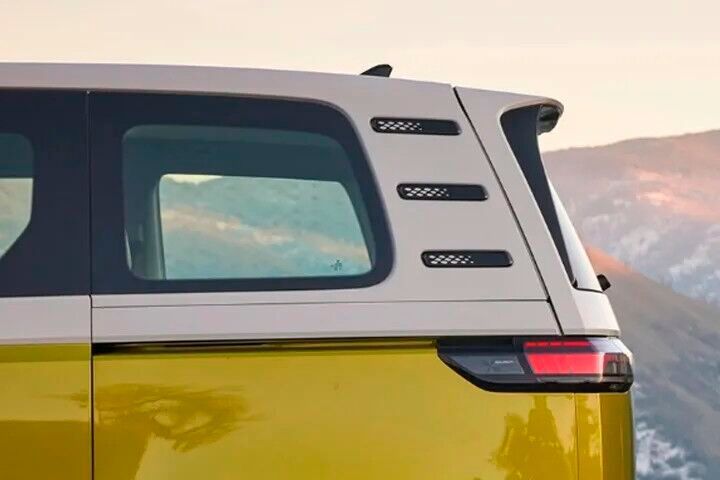
:quality(80)/p7i.vogel.de/wcms/f9/f5/f9f57311bf11e78d4f869757886b29cf/0132826156v1.jpeg "The rear spoiler, wingflaps and pillar trims on the Volkswagen ID. Buzz are manufactured using the mould-in-color injection moulding process with Plexiglas moulding compound in Piano Black. The glossy black, glass-like surface creates a harmonious transition to the dark tint of the windows. (Source: Volkswagen)")
:quality(80)/p7i.vogel.de/wcms/db/06/db06711acef708ea787e0ca06ed6da4a/0132826157v1.jpeg "A peek into production: Experts at Finke Anwendungstechnik use injection moulding to produce the rear spoiler for the ID. Buzz as a 2C component — polycarbonate finished with black, high-gloss Plexiglas moulding compound. (Source: Finke Anwendungstechnik)")
:quality(80)/p7i.vogel.de/wcms/7d/e9/7de9cbdb83fd233623fd888bc28b3f61/0132826155v1.jpeg "High-quality, glossy, black, and UV- and chemical-resistant — all without coating: Deep black colored Plexiglas moulding compound fulfills all requirements for the material used in the rear spoiler and wingflaps of the Volkswagen ID. Buzz. (Source: Volkswagen)")
:quality(80)/p7i.vogel.de/wcms/41/bd/41bdda91348cf36a3980b0cc3709cfe3/0132273525v2.jpeg "A view into the mould area of the Engel duo 4000 combi M with 40000 kN clamping force. The turning-platen design allows several processes to be combined in a single mould, from film back-moulding to flooding with polyurethane. For processors, this means shorter process chains and lower unit costs in the production of large-format exterior components. (Source: Alessandro Cereda/ Engel)")
:quality(80)/p7i.vogel.de/wcms/f1/12/f112e5e8db4ff1232d54f920fca026f9/0133088866v1.jpeg "New multi-colour mixing head for automated colour changes (Source: Krauss Maffei)")