


:quality(80)/p7i.vogel.de/wcms/f7/af/f7afe417b4adb08dbfef13888357d068/0133977694v2.jpeg "Developed by the Life Biobcompo project, a cellulose-fibre biocomposite enables injection-moulded automotive parts to weigh around 8 percent less than conventional mineral-filled alternatives. (Source: free licensed)")
:quality(80)/p7i.vogel.de/wcms/b0/7a/b07a7095a06502f296a68cc23c0333fd/0133339310v4.jpeg "The positive trends experienced in the machine tool industry are continuing into the second quarter: incoming orders increased by 12 percent compared to the previous year. (Source: VDW)")
:quality(80)/p7i.vogel.de/wcms/4b/e2/4be222cca85fc9ccbdf26c552cfc3c4c/0132990447v1.jpeg "A research project highlights potential of high-quality material loops for cars. (Source: BMW Group)")
:quality(80)/p7i.vogel.de/wcms/55/47/55478646728684cec46485443d736f85/0132634476v1.jpeg "Geopolitical tensions and weak demand weighed heavily on Italy's machine tool industry (Source: free licensed / KI-generiert)")
:quality(80)/p7i.vogel.de/wcms/ba/32/ba32a55aaa4e196d2a1026cf913ded48/0133978461v2.jpeg "Live machine demonstrations at Industrial Spring will allow visitors to assess machining quality, operating speed and automation options. (Source: Targi Kielce)")
:quality(80)/p7i.vogel.de/wcms/8e/e8/8ee8d2f8dea56aaa761493cf2426f212/0133946057v1.jpeg "(Source: Fakuma)")
:quality(80)/p7i.vogel.de/wcms/ca/7f/ca7fe83775a6375546830e0c35d4d437/0133611107v2.jpeg "From 2027 onwards, Plastifocus will be jointly organized by Messe Düsseldorf India and PMMAI. (Source: Plastifocus)")
:quality(80)/p7i.vogel.de/wcms/8e/25/8e2561d12b8caeba7125507a0c957e6e/0133564611v1.jpeg "Nexgem brings together companies from the worlds of mechanical engineering, IT and software. (Source: VDW)")
:quality(80)/p7i.vogel.de/wcms/79/08/79089acfc67977e1b309b80a97019206/0133974920v1.jpeg "Meusburger’s range of products includes various components that are designed to meet the requirements of clean production environments. (Source: Meusburger)")
:quality(80)/p7i.vogel.de/wcms/ef/d9/efd965669c2b340c38a2c20dcf4afa81/0133864608v2.jpeg "In its portal, Meusburger has brought together the content and functions that are especially relevant for designers. (Source: Meusburger)")
:quality(80)/p7i.vogel.de/wcms/be/e8/bee8bde13322fc346ce002a4c89532e7/0133864600v2.jpeg "Dry Station “Krake” by Nonnenmann (Source: Nonnenmann)")
:quality(80)/p7i.vogel.de/wcms/e6/c3/e6c340d00ffdfcd19deb929048e947b6/0133867133v2.jpeg "Strack Norma’s Z41 flat latch lock features a new latch geometry designed to handle higher pulling and locking forces in injection moulds while maintaining a compact design. (Source: Strack Norma)")
:quality(80)/p7i.vogel.de/wcms/14/ee/14ee6aafef7bdb1028be7db5bff4bcc4/0133954044v2.jpeg "Renishaw’s Miskin expansion combines additional manufacturing capacity with investment in employee facilities, apprenticeships and engineering skills. (Source: Renishaw)")
:quality(80)/p7i.vogel.de/wcms/19/ea/19ead0e1b537e322629604b4e5c9a30b/0133747715v2.jpeg "Large-format 3D printing application: an automotive inspection fixture that is precise and light enough to handle without a crane. (Source: Herrmann Additive)")
:quality(80)/p7i.vogel.de/wcms/5d/3e/5d3ef4c4bdab296c816e624b38e624c6/0133609076v2.jpeg "BMFs PSL micro-precision 3D printing enables complex 3D microfluidic channels and intricate internal geometries for rapid design validation (Source: BMF)")
:quality(80)/p7i.vogel.de/wcms/32/44/32440bdff907b379245f456130355549/0133341463v1.jpeg "Stratasys F870 FDM system, a large-format additive manufacturing platform designed for industrial manufacturers, automotive OEMs, aerospace & defense production lines, looking to scale production on the factory floor. (Source: Stratasys)")
:quality(80)/p7i.vogel.de/wcms/45/01/4501752ebc868bfb7b476a2a163f8ecc/0133744823v1.jpeg "(Source: Yamazaki Mazak )")
:quality(80)/p7i.vogel.de/wcms/2e/16/2e164579148a37acfe863dd3fbd9efb4/0133610821v2.jpeg "The FG-400 Neo, built for large-scale heavy-duty structural tube processing, will also be on display at Euroblech 2026. (Source: Mazak)")
:quality(80)/p7i.vogel.de/wcms/24/07/2407a4874f3c763937892a12e3e7d125/0133564963v2.jpeg "(Source: Walter)")
:quality(80)/p7i.vogel.de/wcms/03/8e/038ec919753fabff71f6e3473c772f74/0133130761v2.jpeg "The core reason behind the adoption of humanoid robots in the manufacturing or tool and mould making industry is the lack of labour in these markets. (Source: © Maksudul - stock.adobe.com)")
:quality(80)/p7i.vogel.de/wcms/d9/7d/d97d67bf74d61234a4e2dd138ca6e6c8/0133863615v2.jpeg "Presentation of the Research Project of the Year 2026 award to Eike Rodenbäck on 17 September 2026. From left: Dr Stephan Kohlsmann, Chairman of the VDW Research Institute; Eike Rodenbäck, DFKI; and Dr Alexander Broos, Managing Director of the VDW Research Institute. (Source: Messe Stuttgart / Thomas Wagner)")
:quality(80)/p7i.vogel.de/wcms/0e/12/0e126bbc8ee665727406bf4872abc6f0/0133749684v1.jpeg "Pump impeller produced using additive manufacturing followed by subtractive machining. (Source: Open Mind)")
:quality(80)/p7i.vogel.de/wcms/4d/da/4dda0d3b2a4c0b1c1e21dc2deba9264e/0133445150v1.jpeg "Capture machine data in real time and display it clearly with Hummingbird. (Source: Open Mind)")
:quality(80)/p7i.vogel.de/wcms/e1/7d/e17db1eab6fedf3237a12e0ffb739cb9/0133378692v2.jpeg "Meet at the Machine is Siemens’ new initiative designed to bring together machine builders, software and automation technologies to accelerate innovation across the machine tool industry and help manufacturers achieve productivity faster. (Source: Siemens)")
:quality(80)/p7i.vogel.de/wcms/9f/d6/9fd6f5e480734eb5fea4560d6cfdf484/0132969018v1.jpeg "Meusburger blocks for eroding with starting hole and thread (Source: Meusburger)")
:quality(80)/p7i.vogel.de/wcms/5f/66/5f66d32bcf6e2e2fb01b3d98f1c33930/0131994480v1.jpeg "A Mitsubishi Electric MV2400S wire-cut EDM machine will be the first demonstration model to arrive at the Kenilworth showroom and technical centre of recently-appointed sales agent, Whitehouse Machine Tools. (Source: Whitehouse Machine Tools)")
:quality(80)/p7i.vogel.de/wcms/d5/1d/d51def0b31e213e756bbfb9479fa9c7e/0129925621v2.jpeg "Automatic electrode feeding: Together with Sodick and Erowa, the Robot Compact 80 (ERC80) was integrated — including connection to the Zeiss measuring machine and chip-based job management. (Source: Sodick)")
:quality(80)/p7i.vogel.de/wcms/f9/ca/f9ca9cace88200a5ec0946f193264963/0129209504v1.jpeg "Neil Taylor, who has worked in the toolroom at Pre-Met for 20 years. (Source: Pre-Met)")
:quality(80)/p7i.vogel.de/wcms/d8/22/d822065f3d0f05529ff69d7a3f2a5ffb/0133863655v1.jpeg "Omnisurf 5.0 surface roughness analysis software makes it easy to see and explore surface texture data. (Source: Digital Metrology)")
:quality(80)/p7i.vogel.de/wcms/3b/e8/3be8715a291f1d15b36648bd9d680d33/0133863643v1.jpeg "The camera-based Inform-QC system compares component surfaces against a reference condition, reveals deviations and can be integrated directly into existing production lines. (Source: Fraunhofer IGD)")
:quality(80)/p7i.vogel.de/wcms/c8/5b/c85b37436b1df84a1bfe39b5c6d1e201/0133199632v1.jpeg "Enspec is a new professional-grade bridge coordinate measuring machine (CMM) designed to make high-precision inspection more accessible for manufacturers and subcontractors. (Source: Hexagon)")
:quality(80)/p7i.vogel.de/wcms/cd/78/cd788389a1df7689c7ca611e81604444/0133863713v1.jpeg "Diagram show the interface between an EWS Varia base unit (right), which remains in the lathe turret, and a toolholder and cutter mounted in a quick-change adapter. This rapid tool exchange mechanism is used across the company’s entire range of VX, VXT and VXP lathe toolholders. (Source: Nydaloxe)")
:quality(80)/p7i.vogel.de/wcms/af/60/af6036fa7db7018cbe579fe969ee5ff9/0133608414v1.jpeg "Pictured is the zero-point interface version of the Easyfix automatic vice from DMG Mori, which clamps a succession of workpieces of different size in automated manufacturing processes, without the need for manual intervention. (Source: DMG Mori)")
:quality(80)/p7i.vogel.de/wcms/1f/52/1f5247c5477670cf53dc07472f04163c/0133600239v1.jpeg "A Stark.spheric three-point workholding arrangement for supporting an irregularly shaped part, or one that has distorted after stresses have been released after initial machining. Clamping is effected by the Stark.spheric pedestals pulling down on threaded studs previously attached to the underside of the component (or its fixture). (Source: Roemheld)")
:quality(80)/p7i.vogel.de/wcms/c7/0c/c70ce96cc0e31dd84ca136e5f580b010/0133561039v1.jpeg "Diagram show the interface between an EWS Varia base unit (right), which remains in the lathe turret, and a toolholder and cutter mounted in a quick-change adapter. This rapid tool exchange mechanism is used across the company’s entire range of VX, VXT and VXP lathe toolholders. (Source: EWS)")
:quality(80)/p7i.vogel.de/wcms/0b/08/0b08341f8be2aa039063d7585d16e204/0133087099v1.jpeg "The Ruby Dark Mold Polishing Stone is designed for controlled material removal and consistent surface finishes in demanding mold polishing applications. (Source: Jacqueline Southby/ Boride)")
:quality(80)/p7i.vogel.de/wcms/44/e0/44e0d70e930c0ee85447518eda459259/0132763637v2.jpeg "The Focus was developed to meet changing requirements in parts cleaning. This cost-effective solvent cleaning system ensures a high level of cleanliness even with a relatively low cleaning volume. (Source: Karl Roll)")
:quality(80)/p7i.vogel.de/wcms/b8/6f/b86f649863182a925480692939ac91f8/0131684985v1.jpeg "Extreme high-speed Laser Material Deposition (EHLA) enables the additive deposition of functional surfaces with high precision and speed. This allows components to be efficiently coated, repaired, or manufactured with close-to-final-contour precision. (Source: Fraunhofer ILT)")
:quality(80)/p7i.vogel.de/wcms/d5/05/d5057e4ec3f7c3acbed8a4241d0683c6/0131673703v2.jpeg "Copper gauze for cleaning and polishing exposed round or conical surfaces. (Source: Guill)")
:quality(80)/p7i.vogel.de/wcms/5a/e5/5ae5dfc67c07f0ca8347161642c36df3/0130721540v1.jpeg "Müller Präzisionswerkzeuge supports its customers with customised, application-specific tools. (Source: Müller)")
:quality(80)/p7i.vogel.de/wcms/2a/08/2a08f8bd2df95ca843d52cbce64bf355/0131212753v1.jpeg "It has taken time, but the full force of the government’s steel policy is beginning to have a devastating impact on the downstream manufacturing sector according to the President of the Confederation of British Metalforming (CBM). (Source: CBM)")
:quality(80)/p7i.vogel.de/wcms/9e/bd/9ebd826ceed28c644a9205bdbf82beb4/0131007997v2.jpeg "The lead-free aluminium solutions that combine high performance with stable and reliable machining processes. (Source: Eural Gnutt)")
:quality(80)/p7i.vogel.de/wcms/d5/e6/d5e68c74fabff18ef737ee767b7b359f/0130415707v1.jpeg "Efficiency in machining and a reduced carbon footprint will be at the centre of Swiss Steel Group’s presentation at Wire 2026 in Düsseldorf. (Source: Swiss Steel Group)")
:quality(80)/p7i.vogel.de/wcms/2b/4a/2b4a9f2f2aed076fb1f464809f5623b3/0133979238v1.jpeg "Nonnenmann’s newly acquired Weber rotary units business supplies electric and hydraulic systems for multi-component injection moulding, with rotary table diameters from 460 to 1,200 mm. (Source: Nonnenmann)")
:quality(80)/p7i.vogel.de/wcms/79/76/7976718874e2ad83917e8187ce86f21a/0133864578v2.jpeg "Der Produktions- und Logistikstandort für BSH Hausgeräte GmbH in Mellrichstadt. Bildquelle: Panattoni. (Source: Panattoni)")
:quality(80)/p7i.vogel.de/wcms/81/f6/81f64931beca3c0adaee49112bba9181/0133742651v2.jpeg "Dr Martin Kováčik, Executive Vice President Thermoplast Sales and Service EMEA at Shibaura Machine LWB, and Tomaž Rihtaršič, Managing Director of Triproject Bled, have agreed on a partnership covering Croatia and Slovenia with immediate effect. (Source: Shibaura Machine LWB)")
:quality(80)/p7i.vogel.de/wcms/4e/0b/4e0bfa9522bc2c8b0bd07e1dd310eff9/0133682273v1.jpeg "By expanding in-house production, more products can be manufactured directly in Lüdenscheid. (Source: Hasco)")
Repair, reinforce, reuse Laser material deposition: Longer service life for moulds and tools
Related Vendors
:fill(fff,0)/p7i.vogel.de/companies/66/0e/660e93698db24/hasco-logo-or-b50.jpeg "hasco-logo-or-b50 (HASCO)")
:fill(fff,0)/p7i.vogel.de/companies/67/d9/67d95fe309f52/logo-300-169-rgb.jpeg "logo-300-169-rgb (AMPCO METAL)")
:fill(fff,0)/images.vogel.de/vogelonline/companyimg/64200/64280/65.png "Diprofil_logo.png ()")
Die-casting moulds are costly, highly stressed assets — and unexpected tool failure can quickly disrupt production. Fraunhofer ILT is showing how laser material deposition, EHLA and AI-assisted repair processes can extend mould life, reduce downtime and make toolmaking more resource-efficient.
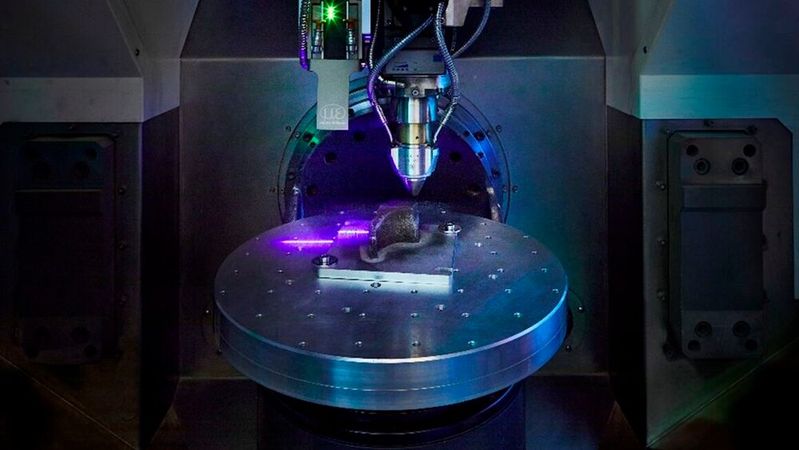
Manufacturing and maintaining die-casting tools professionally is crucial to the foundry industry: As one of the most expensive assets, these tools play a decisive role in determining quality, efficiency, and cost-effectiveness. Easily costing hundreds of thousands of euros, complex moulds and inserts must be able to function over many years without interruption. They must also withstand extreme stress: In die casting, for example, the mould materials are exposed to temperatures of up to 700 °C, while the tools are subjected to mechanical forces of several hundred kilonewtons. Added to these are abrasive stresses on the tool surface and chemical attack by alloying elements in the casting materials. Thermal stresses and material fatigue lead to cracking, erosion, and abrasive wear. Even when the moulds are designed optimally and manufactured carefully, their wear is an unavoidable factor that eventually means tools have to be replaced. If this occurs unexpectedly, it results in significant downstream costs.
The economic implications are significant: Every tool failure results in production downtime, additional setup times, and sometimes a manufacturer needs to produce new inserts or even entire tools. At the same time, manufacturers are under growing pressure to produce and operate moulds both cost-effectively and sustainably. “In an industry where every minute of production time counts, we need processes that can extend tool lifecycles, reduce downtime, and optimize production processes from an environmental perspective,” explains Dr Thomas Schopphoven, Head of the Laser Material Deposition Department at the Fraunhofer Institute for Laser Technology ILT in Aachen, Germany.
Sign in or register and read on
Please log in or register and read this article. To be able to read this article in full, you must be registered. Free registration gives you access to exclusive specialist information.
Already registered? Log in here
:quality(80)/p7i.vogel.de/wcms/ae/38/ae38d9055a94a30815da8c0cb9d3bd22/0131212819v1.jpeg "The Lasertec 65 DED hybrid 2 from DMG Mori. (Source: DMG Mori)")
:quality(80)/p7i.vogel.de/wcms/5f/34/5f34c831c32c2ee971a2c7bd42262ef3/0127678469v1.jpeg "At Formnext, DMG Mori will demonstrate how the Lasertec DED hybrid and Lasertec SLM AM technologies can be seamlessly integrated into end-to-end additive manufacturing process chains. (Source: DMG Mori)")