Agentic AI could make additive manufacturing more adaptable by automating engineering tasks from design to production preparation. At Formnext 2026, Siemens is demonstrating a prompt-based workflow for developing robotic grippers and presenting plans for an adaptive production cell that integrates 3D printing, automation and post-processing.
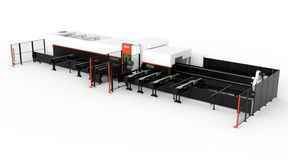
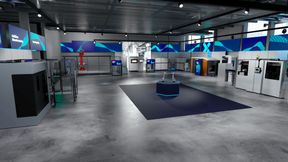
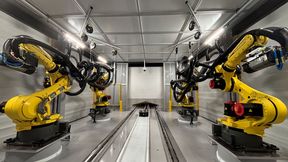
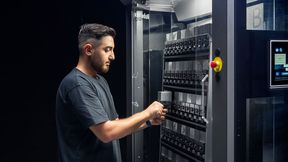
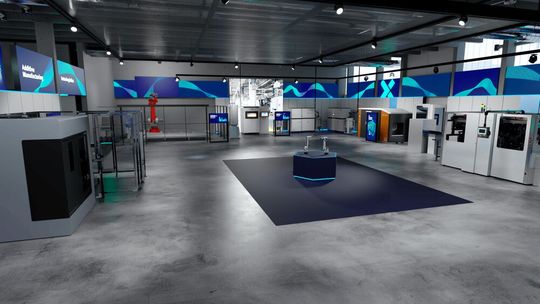
The planned adaptive production cell connects additive manufacturing, automation, post-processing, and software in an integrated process chain
(Source: Siemens)
Technology company Siemens is creating an end-to-end Digital Thread powered by Industrial AI for adaptive product development and production in additive manufacturing. For the first time, it connects agentic, prompt-based engineering with an adaptive production environment, enabling individual product requirements to flow seamlessly from design through to manufacturing. An Agentic AI workflow orchestrates engineering steps from design adaptation and virtual validation to manufacturing preparation. An adaptive production cell will extend this approach from engineering into production.
From manual design to prompt-based engineering
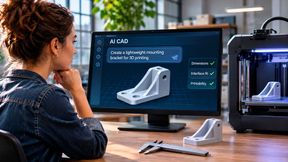
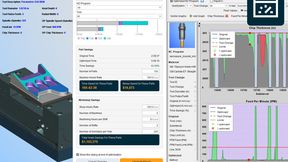
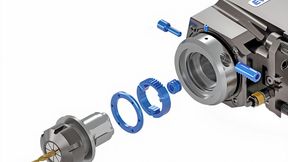
Together with Agibot, Siemens demonstrates how the interplay of Industrial AI and additive manufacturing is changing engineering, using a gripper for a humanoid robot as an example. Instead of manually adapting the gripper step by step for each new application, the user first describes the object to be handled and the desired task. Based on this input, an Agentic AI workflow orchestrates the required engineering steps. It selects a suitable gripper type, adapts the geometry in Siemens' Designcenter, simulates it, and then validates the robot interface and handling. Through MCP integration, the AI agent can access functions of the engineering software and orchestrate the required work steps. Finally, the workflow prepares the data for additive manufacturing.
This shifts part of the engineering process from manual design toward prompt-based engineering. The result is a gripper tailored to the specific application, with a design that can be virtually validated and prepared for additive manufacturing before production begins. This approach can make complex engineering workflows accessible to a broader group of users by reducing the need to interact with each individual engineering tool and process step directly. “Industrial AI is fundamentally changing how we develop and manufacture products. Instead of manually designing variants in a time-consuming process, agentic workflows can orchestrate engineering tasks based on specific requirements. Additive manufacturing is the ideal complement because it enables individual designs to be flexibly turned into physical components. The next step is production that can respond just as flexibly to this variety,” says Karsten Heuser, Vice President Additive Manufacturing at Siemens.
From adaptive engineering to adaptive production
While Industrial AI can accelerate the development of individual components, increasing product variety also places new demands on downstream production processes. To ensure that individual designs can not only be developed but also manufactured efficiently, production must be able to adapt flexibly to different components and process requirements. Siemens is extending this approach from engineering into production with an adaptive production cell for additive manufacturing. Together with EOS and AM Solutions, Siemens is creating a production environment at its Electronics Factory in Erlangen in which additive manufacturing, automation, and software are designed to work together in an integrated process chain. The goal is to accommodate different components and production requirements flexibly, while creating the conditions for repeatable and scalable production processes. “The next stage in the evolution of Industry 4.0 is Industrial AI: the shift from connected and automated factories to intelligent, adaptive manufacturing. By combining Siemens’ expertise in industrial automation, software, and AI with EOS’ expertise in additive manufacturing, we aim to help shape this transformation. Together, we want to advance an independent European approach to the future of manufacturing and translate technological excellence into industrial competitiveness, resilience, and sovereignty,” said Marie Niehaus-Langer, CEO of EOS.
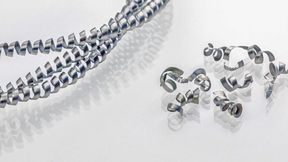
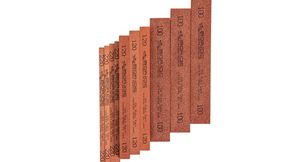
Post-processing of additively manufactured components also plays a central role in the integrated process chain. It is therefore designed to be an integral part of the adaptive production cell from the outset. “The industrialization of additive manufacturing does not end with the printing process. Only when downstream processing steps are seamlessly integrated into the production chain can additive components be manufactured efficiently and reproduced at scale. With the adaptive production cell, we want to demonstrate together how additive manufacturing and automated post-processing can be combined into an integrated industrial process,” said David Soldan, Head of AM Solutions – 3D Post Processing Technology, AM Solutions.
Integrated data as the foundation
Integrated software and data chains are essential for bringing adaptive engineering and adaptive production together. They connect design and simulation with manufacturing preparation, production, and operations. Industrial AI can access this data and help connect individual steps across the entire process. Quality, traceability, security, and human responsibility remain key requirements for industrial deployment.
A structured approach to Industrial AI for additive manufacturing
The AM I Navigator, now enhanced with Industrial AI, helps companies identify and prioritize suitable applications for Industrial AI in additive manufacturing. This can include applications in design and engineering as well as in AM production. Based on the results, companies can define specific pilot projects and develop a roadmap for scaling Industrial AI further.
Date: 08.12.2025
Naturally, we always handle your personal data responsibly. Any personal data we receive from you is processed in accordance with applicable data protection legislation. For detailed information please see our privacy policy.
Consent to the use of data for promotional purposes
I hereby consent to Vogel Communications Group GmbH & Co. KG, Max-Planck-Str. 7-9, 97082 Würzburg including any affiliated companies according to §§ 15 et seq. AktG (hereafter: Vogel Communications Group) using my e-mail address to send editorial newsletters. A list of all affiliated companies can be found here
Newsletter content may include all products and services of any companies mentioned above, including for example specialist journals and books, events and fairs as well as event-related products and services, print and digital media offers and services such as additional (editorial) newsletters, raffles, lead campaigns, market research both online and offline, specialist webportals and e-learning offers. In case my personal telephone number has also been collected, it may be used for offers of aforementioned products, for services of the companies mentioned above, and market research purposes.
Additionally, my consent also includes the processing of my email address and telephone number for data matching for marketing purposes with select advertising partners such as LinkedIn, Google, and Meta. For this, Vogel Communications Group may transmit said data in hashed form to the advertising partners who then use said data to determine whether I am also a member of the mentioned advertising partner portals. Vogel Communications Group uses this feature for the purposes of re-targeting (up-selling, cross-selling, and customer loyalty), generating so-called look-alike audiences for acquisition of new customers, and as basis for exclusion for on-going advertising campaigns. Further information can be found in section “data matching for marketing purposes”.
In case I access protected data on Internet portals of Vogel Communications Group including any affiliated companies according to §§ 15 et seq. AktG, I need to provide further data in order to register for the access to such content. In return for this free access to editorial content, my data may be used in accordance with this consent for the purposes stated here. This does not apply to data matching for marketing purposes.
Right of revocation
I understand that I can revoke my consent at will. My revocation does not change the lawfulness of data processing that was conducted based on my consent leading up to my revocation. One option to declare my revocation is to use the contact form found at https://contact.vogel.de. In case I no longer wish to receive certain newsletters, I have subscribed to, I can also click on the unsubscribe link included at the end of a newsletter. Further information regarding my right of revocation and the implementation of it as well as the consequences of my revocation can be found in the data protection declaration, section editorial newsletter.
Siemens will present the Agentic AI workflow for the humanoid robotic gripper at Formnext 2026 in Frankfurt.