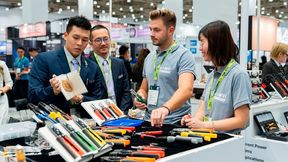
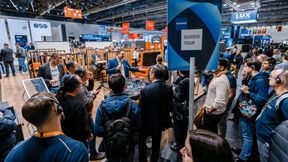
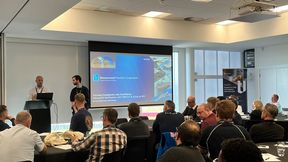
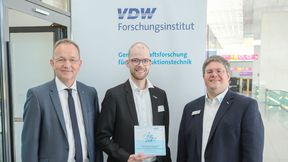
Technology, information, exchange, international networking and cooperation – this is what EMO has been all about for 50 years. (Source: VDW)
EMO 2025

EMO confirms its role as global metalworking hub

For five days, Hannover became the global hub of production technology as EMO 2025 welcomed 80,000 visitors and 1,600 exhibitors. With automation, robotics, AI and sustainability in focus, the world’s leading metalworking trade fair once again set the pace for the future of manufacturing.

Read on
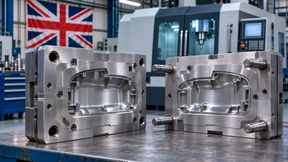
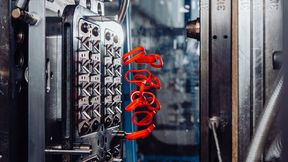
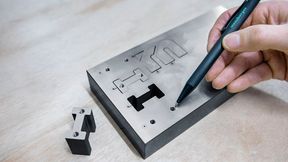
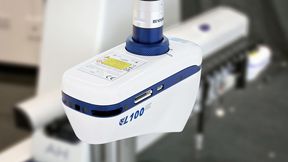
In addition to reliable chip-breaking, LFV lowers cutting resistance, prevents stringy swarf from damaging the component, inhibits the formation of built-up edge to prolong tool life, and extends the period between successive chip disposals, as the swarf volume is smaller. (Source: Citizen Machinery )
Mach 2026

Citizen showcases 4-axis LFV chip-breaking technology

At Mach 2026, Citizen Machinery will showcase its patented 4-axis LFV chip-breaking technology to a broad UK audience for the first time. The low frequency vibration system synchronises tool movement with spindle rotation to eliminate stringy swarf, reduce cycle times and enable uninterrupted lights-out production, even in demanding materials.

Read on

Galleries

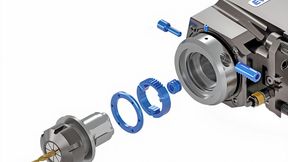
Drillmeister and Tungmeister heads (Source: Tungaloy)
Exchangeable-head tools

Tool design responds to raw-material scarcity

Rising tungsten prices and growing raw-material constraints are forcing cutting tool manufacturers to rethink efficiency at the source. As cost pressure builds toward 2026, modular, exchangeable-head carbide tools are emerging as a strategic response — cutting material use, reducing waste, and delivering flexibility without compromising performance.

Read on
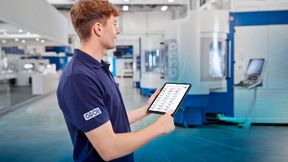
Artificial intelligence is transforming manufacturing — from predictive maintenance to self-learning machine tools — and is shaping the future of industrial production. (Source: free licensed)
Artificial intelligence

Machines will think along with us in the future
Artificial intelligence is redefining industrial manufacturing, turning machine tools into self-learning, adaptive partners that optimise processes, reduce waste and ease the impact of skills shortages. From predictive maintenance to intuitive operator guidance, AI is emerging as a key driver of efficiency, flexibility and competitiveness in modern production.

Read on