Renovate first, then sell! The saw blade manufacturer AKE Knebel took an unusual approach. The workforce and AI both contributed to the renovation.
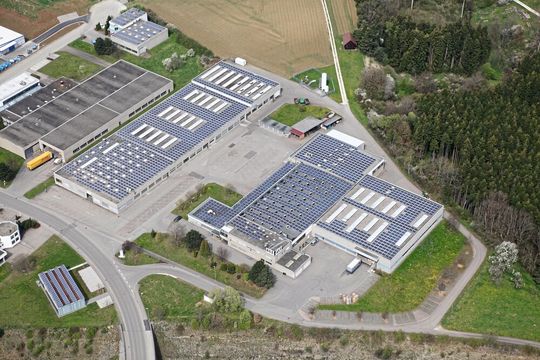
AKE Knebel in Balingen-Engstlatt: Using four levers—ideas competition, on-time delivery, product portfolio, and sales—the tool manufacturer drove its transformation forward in 2026.
(Image: Falkensteg)
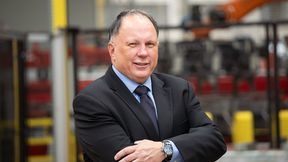
Markus Haase is Head of Marketing & Corporate Communications at Falkensteg
An interim CEO, 555 ideas, and a concurrent investor process: The tool manufacturer AKE Knebel, based in Balingen, restructured its operations in 2026 and changed ownership. This case illustrates why on-time delivery is a key value driver in precision toolmaking—and why the restructuring process should not wait until after the sale to begin.
Three Lessons for Tool Manufacturers
1. Generate innovations, implement them quickly, and leverage AI. The workforce knows where the bottlenecks are. A structured survey—whose responses are evaluated based on impact and effort—delivers a list of priorities within weeks. 2. On-time delivery beats price—if it can be verified. In the premium segment, it’s not the last percentage point in price that matters, but whether the machine is up and running at the customer’s site. A promise kept—such as “order today, shipped today”—has a stronger impact than any statistic. 3. If you want to sell, don’t leave the turnaround to the buyer. Otherwise, they’ll do it themselves—and factor the cost into the purchase price. Visible progress in the ongoing process is the most effective tool at the seller’s disposal.
If the saw blade is missing, the machine stops
A circular saw blade costs a fraction of what the machine it runs on costs. But if it’s missing because the manufacturer isn’t delivering, the production line at the sawmill comes to a standstill, as does the panel cutting saw at the furniture factory and the profile machining center at the aluminum processor. The damage isn’t done to the tool, but to the customer—and the customer remembers who kept them waiting.
This was exactly where AKE Knebel found itself in early 2026. The manufacturer of circular saw blades and milling tools—which had been in business since 1960 and was named “World Market Leader Champion” by WirtschaftsWoche in 2025—had lost its ability to deliver on time. Major customers both domestically and abroad had left the company. At the same time, a change in ownership was on the horizon.
Eight months later, on September 1, 2026, CSSP Werkzeug Holding GmbH acquired all of the shares. In between, there was a restructuring program in which the sale was not the end goal but rather a key component from the very beginning. For tool manufacturers in a similar situation, it is not so much the outcome that is of interest as the process itself.
Premium Manufacturers Caught in the Cost Squeeze
AKE’s situation was the most extreme manifestation of what the industry has been experiencing for years. Customers in the wood and furniture industries, as well as in metal and aluminum processing, are investing cautiously. According to the VDMA, German precision tool manufacturers produced about seven percent less in 2025; for the mechanical engineering sector as a whole, 2026 is shaping up to be the fourth consecutive year of decline. At the same time, cost pressures have intensified: tungsten, the raw material for cemented carbide, cost about six times as much in the spring of 2026 as it did at the beginning of 2025. Rising input costs are colliding with sales prices that can hardly be adjusted due to long-term contracts and limited pricing power.
Premium suppliers are also subject to a particular effect. Cheap imports from Asia and Eastern Europe cannot replace a saw blade designed specifically for a customer, but they set the price benchmark for customers—even for the premium product. Those who manufacture knowledge-intensive, customer-specific tools are protected against substitution, but not against the price pressure generated by those substitutes.
In this dilemma, every internal weakness becomes a liability for the company. A portfolio that is too broad ties up capacity and lengthens lead times. Long lead times compromise on-time delivery, and compromised on-time delivery leads to lost customers. And those same fixed costs are spread across fewer units. The downward spiral continues.
Synchronization Instead of Sequence
The obvious approach would have been to first find a buyer and then leave the turnaround to them. This sequence comes at a cost, and that cost is factored into the purchase price. An investor evaluating a company with declining delivery reliability and an uncompetitive cost base does not assess the potential but rather the risk. The investor either factors the restructuring costs into the price or walks away from the deal. The seller ends up paying for a restructuring that he did not carry out himself.
AKE decided otherwise. In mid-January 2026, owner Alexander Knebel handed over day-to-day operations to Christoph Schnabel of the consulting firm Falkensteg. Schnabel took over as CEO of the group—not as a consultant working alongside management, but as an interim CEO with executive responsibility. In February, the investor process began, led by Falkensteg Corporate Finance; strategic acquirers and financial investors, both domestic and international, were approached. The restructuring and the sale thus put pressure on each other: every improvement had to come early enough to count in the process. And every investor could assess whether it made a difference.
Date: 08.12.2025
Naturally, we always handle your personal data responsibly. Any personal data we receive from you is processed in accordance with applicable data protection legislation. For detailed information please see our privacy policy.
Consent to the use of data for promotional purposes
I hereby consent to Vogel Communications Group GmbH & Co. KG, Max-Planck-Str. 7-9, 97082 Würzburg including any affiliated companies according to §§ 15 et seq. AktG (hereafter: Vogel Communications Group) using my e-mail address to send editorial newsletters. A list of all affiliated companies can be found here
Newsletter content may include all products and services of any companies mentioned above, including for example specialist journals and books, events and fairs as well as event-related products and services, print and digital media offers and services such as additional (editorial) newsletters, raffles, lead campaigns, market research both online and offline, specialist webportals and e-learning offers. In case my personal telephone number has also been collected, it may be used for offers of aforementioned products, for services of the companies mentioned above, and market research purposes.
Additionally, my consent also includes the processing of my email address and telephone number for data matching for marketing purposes with select advertising partners such as LinkedIn, Google, and Meta. For this, Vogel Communications Group may transmit said data in hashed form to the advertising partners who then use said data to determine whether I am also a member of the mentioned advertising partner portals. Vogel Communications Group uses this feature for the purposes of re-targeting (up-selling, cross-selling, and customer loyalty), generating so-called look-alike audiences for acquisition of new customers, and as basis for exclusion for on-going advertising campaigns. Further information can be found in section “data matching for marketing purposes”.
In case I access protected data on Internet portals of Vogel Communications Group including any affiliated companies according to §§ 15 et seq. AktG, I need to provide further data in order to register for the access to such content. In return for this free access to editorial content, my data may be used in accordance with this consent for the purposes stated here. This does not apply to data matching for marketing purposes.
Right of revocation
I understand that I can revoke my consent at will. My revocation does not change the lawfulness of data processing that was conducted based on my consent leading up to my revocation. One option to declare my revocation is to use the contact form found at https://contact.vogel.de. In case I no longer wish to receive certain newsletters, I have subscribed to, I can also click on the unsubscribe link included at the end of a newsletter. Further information regarding my right of revocation and the implementation of it as well as the consequences of my revocation can be found in the data protection declaration, section editorial newsletter.
Four Leverage Points for Tool Manufacturers
The program had many components. Four of them can be applied to other manufacturers.
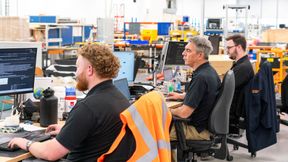
Workforce: Idea generators and contributors. No one knows a plant’s bottlenecks as well as the people who work there. AKE therefore made targeted use of their experience and knowledge. In an innovation survey conducted by Christoph Schnabel and Falkensteg, the workforce contributed 555 ideas. With the help of AI, these ideas were evaluated based on their impact and the effort required. The most promising ones were quickly put into action. In this way, suggestions from the shop floor were quickly turned into concrete measures that reduced costs and improved processes.
AKE also reached a solution with the works council and IG Metall based on the principle of “contribution in exchange for consideration”: The agreement from June 2026 stipulates that 40 percent of vacation pay and 60 percent of the Christmas bonus will be paid out; in addition, there are six extra vacation days, and job security is guaranteed through March 31, 2027. For prospective buyers, this is a plus: Anyone who buys a company with a viable agreement with labor representatives does not also buy into the risk of conflict.
On-time delivery: a promise that can be verified. Instead of an abstract target rate, AKE made a concrete promise: Every domestic order for an in-stock item received by 10 a.m. will leave the factory the same day. To achieve this, order processing, manufacturing, and shipping were reorganized. By June, AKE had kept this promise for 100 consecutive days. For custom saw blades, on-time delivery returned to industry standards, and production times decreased by 20 to 25 percent. The key is the format: A customer can verify and pass on the message “Ordered today, shipped today,” but they cannot do the same with an abstract figure.
Portfolio: Complexity that nobody pays for. Over the decades, the product range had grown, variant by variant. Each one ties up setup time, storage space, and planning resources, without the customer paying more for it. AKE streamlined the portfolio and focused on its core business of tool and saw blade manufacturing. Fewer variants mean shorter lead times—and only then can a delivery promise be kept. In contrast, the regrinding and maintenance service is being expanded in a targeted manner: It retains customers throughout the product lifecycle and smooths out revenue streams.
Sales: AI at the Service of Customers. AKE uses AI wherever it benefits customers. Even before the change in ownership, the company introduced an AI-powered sales assistant. If a regular customer deviates from their usual ordering pattern or if an open quote is in danger of falling through, the assistant notifies the responsible employee so they can respond quickly.
Alongside these four strategies, AKE won back major customers and launched new products, including the Fusion Cutter, a DP jointing cutter for the wood and furniture industries. Innovation did not replace day-to-day operations but built upon them: When a company delivers on time again, its new products are taken seriously.
What the Investor Saw
This alignment paid off where it had generated the most pressure: during the review by prospective buyers. Anyone who looked at the documents found not only announced measures but also ongoing ones—and monthly figures that showed whether the program was working: shorter production times, improved on-time delivery rates, regained customers, rising order volumes, and a cost base that was once again competitive.
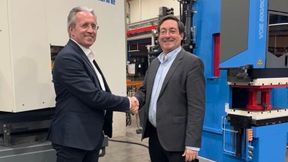
After about six months, the investor selection process was completed. The contract was awarded to CSSP Werkzeug Holding, a family-run, long-term-oriented owner that acquires medium-sized industrial companies with the aim of further developing them operationally. “AKE is a company with substance: technologically advanced products, quality that has been honed over decades, and a workforce that knows its craft. That’s exactly what we’re counting on,” says CSSP Managing Director Siegmund Rudigier. For the group’s approximately 500 employees, this means continuity.
AKE Toggle Switch
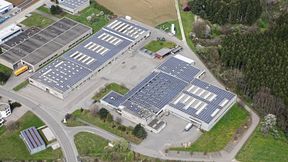
In business since: 1960 Headquarters: Balingen-Engstlatt Products: Circular saw blades and milling tools, both standard and custom-made, for raw lumber, panel materials, plastics, insulation materials, aluminum, and other metals Services: Maintenance and regrinding services throughout the entire tool life cycle Main markets: Sawmills, the furniture industry, and metal and aluminum processing Employees: Approximately 500 within the group Locations: Balingen, Rietberg, and Prien; additional subsidiaries in France, Italy, Lithuania, Poland, Romania, and Hungary