Combining different manufacturing processes often pays dividends for manufacturing companies. This also applies to grinding and precision machining. Grinding Hub will provide a compact overview of the market for production technologies in this challenging environment.
The “Two-in-One concept” means that users can 100 percent erode (PCD) tools or 100 percent grind (carbide) tools using the same machine.
(Source: Walter Maschinenbau)
The advance of additive manufacturing processes is inevitable, as they yield a whole range of impressive advantages. In addition to increasing productivity by enabling flexible production and eliminating the need for conventional toolmaking, the large variety of geometric design possibilities also allows the processing of highly complex components. The high degree of flexibility ensures that small to medium quantities can now be produced using industrial 3D printing. However, there is still need for post-processing in many cases. Depending on the component and process, it may be necessary to remove any auxiliary and support structures used during the additive process. Otherwise, surface finishing operations such as milling, grinding or superfinishing and component inspection have to be performed. Other processes such as component cleaning and marking are possible, as is the entire handling process, including sorting and packaging.
For greater efficiency, however, it is necessary to incorporate both additive and subtractive manufacturing in a hybrid system. The post-processing requirements need to be taken into account from the outset when creating the 3D model. Applying too much material leads to increased costs, whereas too little makes post-processing of the workpiece difficult or impossible. Ideally, there is direct data integration throughout the process chain. In practice, this means that the processes are precisely coordinated and are carried out without any need for further workpiece handling. Robot-assisted and automated solutions such as an innovative manufacturing cell for automated surface finishing by Supfina Grieshaber, based in Wolfach in the Black Forest, are designed for precisely this purpose. Processes can be flexibly combined and seamlessly integrated into production with just one setup. This yields both high surface fidelity and improved cost effectiveness. The Supfina specialists will also be exhibiting in Stuttgart and will be happy to provide further information.
Highly efficient tool production based on combination machining
Increasingly complex and precise tools made of different materials are currently being developed which pose challenges for the manufacture of tool grinding machines. “Not all materials or combinations can be fully processed simply by grinding alone,” explains Siegfried Hegele, Applications Product Manager at Walter Maschinenbau, Tübingen. “Technologies such as EDM or lasers, including measurement systems, are also required. As system and solution providers, Walter and Ewag are single-source suppliers of solutions for all tool machining requirements. These, too, will be showcased at Grinding Hub.”
Manufacturing a PCD (polycrystalline diamond) tipped milling tool, for example, involves several steps. Here, a sintered carbide tool is first subjected to cylindrical grinding. The chip spaces are then ground. A machine with high spindle power is required in order to perform these operations effectively. The next step involves grinding the plate seats in the carbide bodies. Unlike at the beginning, high speeds are required here because of the small grinding pins. Before soldering can take place, it first needs to be checked whether the tolerances have been observed during the grinding processes. Ideally, this is done using an automatic CNC measuring machine. The next step is to solder the PCD plates pre-cut from a PCD circular bed into the plate seats. Here, the polycrystalline diamond is briefly heated to near graphitization temperature. After that, the tool must be cleaned and a decision must be made as to which technology is best suited for machining the PCD. Here, combined machining involving different technologies such as grinding and EDM can yield significant advantages. A final measurement is then made for quality control.
Reduced times, improved productivity and quality
Combining manufacturing processes also opens up new potential in production. The classic motivation for simultaneous multiple machining of a workpiece within a machine containing several spindles, for example, is to reduce the cycle time. In principle, however, the machines required for this involve high investment costs and are only economical for large quantities due to their low flexibility. Furthermore, hybrid machining on a single machine can help raise quality, productivity and process reliability levels, as fewer errors arise from the clamping or transporting of components.
Date: 08.12.2025
Naturally, we always handle your personal data responsibly. Any personal data we receive from you is processed in accordance with applicable data protection legislation. For detailed information please see our privacy policy.
Consent to the use of data for promotional purposes
I hereby consent to Vogel Communications Group GmbH & Co. KG, Max-Planck-Str. 7-9, 97082 Würzburg including any affiliated companies according to §§ 15 et seq. AktG (hereafter: Vogel Communications Group) using my e-mail address to send editorial newsletters. A list of all affiliated companies can be found here
Newsletter content may include all products and services of any companies mentioned above, including for example specialist journals and books, events and fairs as well as event-related products and services, print and digital media offers and services such as additional (editorial) newsletters, raffles, lead campaigns, market research both online and offline, specialist webportals and e-learning offers. In case my personal telephone number has also been collected, it may be used for offers of aforementioned products, for services of the companies mentioned above, and market research purposes.
Additionally, my consent also includes the processing of my email address and telephone number for data matching for marketing purposes with select advertising partners such as LinkedIn, Google, and Meta. For this, Vogel Communications Group may transmit said data in hashed form to the advertising partners who then use said data to determine whether I am also a member of the mentioned advertising partner portals. Vogel Communications Group uses this feature for the purposes of re-targeting (up-selling, cross-selling, and customer loyalty), generating so-called look-alike audiences for acquisition of new customers, and as basis for exclusion for on-going advertising campaigns. Further information can be found in section “data matching for marketing purposes”.
In case I access protected data on Internet portals of Vogel Communications Group including any affiliated companies according to §§ 15 et seq. AktG, I need to provide further data in order to register for the access to such content. In return for this free access to editorial content, my data may be used in accordance with this consent for the purposes stated here. This does not apply to data matching for marketing purposes.
Right of revocation
I understand that I can revoke my consent at will. My revocation does not change the lawfulness of data processing that was conducted based on my consent leading up to my revocation. One option to declare my revocation is to use the contact form found at https://contact.vogel.de. In case I no longer wish to receive certain newsletters, I have subscribed to, I can also click on the unsubscribe link included at the end of a newsletter. Further information regarding my right of revocation and the implementation of it as well as the consequences of my revocation can be found in the data protection declaration, section editorial newsletter.
In addition to combining grinding technology and cutting processes with a geometrically determined cutting edge, the interaction of different grinding processes within a single machine is also highly useful. In the case of gears, for example, special finishing processes are increasingly being used to carry out the machining within the grinding machine itself. Until now, finishing has often required additional equipment (for vibratory grinding for example) which is often only available from external service providers. "In the past, when gears were manufactured in the automotive industry, the high costs involved meant that they were rarely reworked. Hybrid tool concepts are now increasingly being used here, enabling both grinding and finishing operations to be carried out," says Prof. Eckart Uhlmannhead of the Fraunhofer Institute for Production Systems and Design Technology (IPK) in Berlin. He is also a member of the WGP (German Academic Association for Production Technology), an association of leading academics in the sector. "Grinding Hub recently declared its intention to function as an information hub, providing multiple opportunities for sharing knowledge."
As an international platform, Grinding Hub 2022 will cover all grinding technology and superfinishing processes. The organizer VDW, in cooperation with Messe Stuttgart and Swissmem, is creating the necessary framework for this. Grinding machines, tool grinding machines and abrasives are the main focus – accompanied by software solutions, automation offerings and related services.
* Dag Heidecker, daxTR – Technik + Redaktion, Wermelskirchen



:quality(80)/p7i.vogel.de/wcms/73/8a/738a9f20229e20ae938c5e690b37a5df/0129780274v1.jpeg "With the acquisition of Knudsen Plast, MGS expands its European cleanroom injection moulding capacity and strengthens regional support for pharma, diagnostics and MedTech customers. (Source: MGS)")
:quality(80)/p7i.vogel.de/wcms/d2/63/d26376330f084c718f9ab83fc66eb39f/0129319680v1.jpeg "Situation in mechanical engineering: VDMA Chief Economist Dr. Johannes Gernandt looks back on the past year, with a particular focus on December: “Given the recent developments, we expect a slight increase in 2026. Sentiment is improving, but there is no reason for celebration.” (Source: VDMA / Sarah Kastner Fotografie)")
:quality(80)/p7i.vogel.de/wcms/4f/a9/4fa94db21a092a12fdb0822e3d5c8150/0129504798v1.jpeg "Riccardo Rosa, president of Ucimu, pointed out: “The overall outcome of the order collection regarding 2025 is in line with that of the last two years and thus disappointing once again”. (Source: Ucimu/ Ruggiero Scardigno)")
:quality(80)/p7i.vogel.de/wcms/8d/b7/8db71c3fe25cd48399bfd8faaa5e90f7/0129228188v1.jpeg "The Contract Manufacturing Index shows the value of the market for contract and subcontract manufacturing services for machining, fabrication, and other processes. (Source: Qimtek)")
:quality(80)/p7i.vogel.de/wcms/d5/95/d5954dbd50e0262743b46bdc6d6734f8/0129685950v2.jpeg "Industry players praise the special user benefits as well as the unique spirit of this practical trade fair with its lively atmosphere. (Source: P.E. Schall)")
:quality(80)/p7i.vogel.de/wcms/af/56/af56bd4ae5b0e079ca69c244525b2cd1/0129646105v2.jpeg "This year’s expo cluster not only reflects the strong position of the Metal trade fair but also marks the debut of the Nonferra and the premiere of the Filvent Expo. (Source: Targi Kiecle)")
:quality(80)/p7i.vogel.de/wcms/ba/ea/baea897f2d161c46f0872c77cd26fb6b/0129039787v1.jpeg "The momentum of smart manufacturing is accelerating – TMTS 2026 showcases Taiwan's industrial strength. (Source: TMTS)")
:quality(80)/p7i.vogel.de/wcms/a6/06/a606d5e06236baca21d7f53019dedf42/0129504701v1.jpeg "Vomat filters clean in full flow and separate dirty and clean oil 100 percent. (Source: Vomat)")
:quality(80)/p7i.vogel.de/wcms/63/53/6353c75a9072fc20846b40065c12f724/0129533055v1.jpeg "Industrial connectors operate at critical interfaces in automated production, where reliability under vibration, heat and contaminants directly affects uptime and maintenance effort. (Source: Mencom)")
:quality(80)/p7i.vogel.de/wcms/b7/e0/b7e0832ad0be13fb559a7028f2ef02c7/0129386806v2.jpeg "(Source: Husky)")
:quality(80)/p7i.vogel.de/wcms/5d/3c/5d3cd553a019b4033e441e61f98b23d6/0129229293v1.jpeg "Featured also will be the Roemheld Moduhub equipment range, designed to help operators handle heavy or awkward components safely and efficiently during manual assembly. It also has the facility to feed back production data. (Source: Roemheld)")
:quality(80)/p7i.vogel.de/wcms/82/e7/82e72d20cefdef73713b584312be57d0/0129209599v2.jpeg "Asim Spahović, Hasco (third from left), in discussion with BSI customers Erwin Bekto, Redžo Bekto and Mehmed Šehić (from left to right). (Source: Hasco)")
:quality(80)/p7i.vogel.de/wcms/1b/0e/1b0e941c5cd87abf76e420f13ef9adaf/0129842848v1.jpeg "Conceptual diagram showing AI-based analysis and prediction of how powder characteristics and process conditions affect defects and component performance in metal 3D printing processes.
(Source: Korea Institute of Materials Science (Kims))")
:quality(80)/p7i.vogel.de/wcms/12/e6/12e60f69147f2d777c8fea551f7211a7/0129831745v1.jpeg "Illustration of the laser‑leading method. (Source: Keita Marumoto/ Hiroshima University)")
:quality(80)/p7i.vogel.de/wcms/4f/28/4f282db53ba4d229cbced88209c8dd20/0129831716v1.jpeg "3D printing can be sustainable - if recyclable ink is used. Photo: Hereon/Steffen Niemann (Source: Hereon/ Steffen Niemann)")
:quality(80)/p7i.vogel.de/wcms/85/70/8570373dd63e66be4f68b2ca4a91e867/0129831343v1.jpeg "Biochar–polymer composites for 3D printing: a review
(Source: Rachel Day)")
:quality(80)/p7i.vogel.de/wcms/b6/71/b671ec6d3c6c464021614f9024410506/0129835130v1.jpeg "Mazak’s new UK-made CV5-700 5-axis machining centre. (Source: Mazak)")
:quality(80)/p7i.vogel.de/wcms/76/cb/76cb34489d92452e54fcd6157586be12/0129796759v2.jpeg "In addition to reliable chip-breaking, LFV lowers cutting resistance, prevents stringy swarf from damaging the component, inhibits the formation of built-up edge to prolong tool life, and extends the period between successive chip disposals, as the swarf volume is smaller. (Source: Citizen Machinery )")
:quality(80)/p7i.vogel.de/wcms/21/1b/211b0274a9a8ee51eb7d39767a632837/0129639547v1.jpeg "DMG Mori’s deep hole drilling technology cycle deskills a machining process that previously required an experienced operator. (Source: DMG Mori)")
:quality(80)/p7i.vogel.de/wcms/69/59/6959edab3090fb6cf478998605b90f26/0129542165v1.jpeg "Hurco’s stand was busy throughout the three days at Southern Manufacturing & Electronics 2026. (Source: Hurco)")
:quality(80)/p7i.vogel.de/wcms/6e/48/6e487ebc4e8332824f45a9174a171a4c/0129666289v1.jpeg "“For CNC processes you’re talking millions of points — you can’t teach a robot that; you need CAM,” recalls managing director Lander Debruyne. (Source: Ency)")
:quality(80)/p7i.vogel.de/wcms/96/16/9616c2fc580d720e8b3f91bbffcc5a01/0129504787v1.jpeg "Hummingbird MES offers real time insight into machine performance. (Source: Open Mind)")
:quality(80)/p7i.vogel.de/wcms/9b/5d/9b5db33353f3e5a256e2f634ddc349c7/0129333056v1.jpeg "Browser-based simulation results showing improved cooling times after accepting SimForm's automated channel recommendations. (Source: Machine Works)")
:quality(80)/p7i.vogel.de/wcms/0a/e1/0ae1b7a9cc45bf10ebcbce27be707eda/0129230371v1.jpeg "Vericut Optimizer is a standalone optimisation solution that works directly from NC code. (Source: Vericut)")
:quality(80)/p7i.vogel.de/wcms/f9/ca/f9ca9cace88200a5ec0946f193264963/0129209504v1.jpeg "Neil Taylor, who has worked in the toolroom at Pre-Met for 20 years. (Source: Pre-Met)")
:quality(80)/p7i.vogel.de/wcms/2f/61/2f61dd20be68049fa2320a2e5aa860d7/0123789183v2.jpeg "from left to right: Sodick President Giuseppe Addelia and Vice President Salvatore Cocco (Source: Sodick)")
:quality(80)/p7i.vogel.de/wcms/c5/49/c54973f28495dada1c7605f913717341/0121533734v1.jpeg "The set-up of the complex parts on the new Sodick ALC600G (Source: Sodick)")
:quality(80)/p7i.vogel.de/wcms/94/8f/948f81f46645691d1d90152ef605a0ae/0120806008v2.jpeg "Some of the billets clamped and ready for lights out machining at Bellcliffe. (Source: ETG)")
:quality(80)/p7i.vogel.de/wcms/46/85/46854ab7a2679db67354f556f2bc1db9/0129539660v2.jpeg "Nikon Eclipse MA200 LED is an inverted microscope with reflected illumination that is ideal for inspecting industrial parts. (Source: Nikon)")
:quality(80)/p7i.vogel.de/wcms/3e/61/3e61ccb050c57809ce8f7cde582ef4c2/0129679889v1.jpeg "The Equator-X dual-method gauging system brings unique capability to the shop floor with its dual measurement functionality. (Source: Renishaw)")
:quality(80)/p7i.vogel.de/wcms/88/a2/88a2be18834640f6e34db6bcaa98da06/0129504771v1.jpeg "The new Ready Corex 250 industrial X-ray CT system from LK Metrology is designed for inspection and measurement on the shop floor. (Source: LK Metrology)")
:quality(80)/p7i.vogel.de/wcms/04/3d/043d3f95c300d98d7188d2c2f0673aa5/0129365083v1.jpeg "The extremely high demands placed on manufacturing precision in high-tech industries include the cleanliness of components. These sometimes extremely strict requirements call for appropriately designed cleaning processes and systems as well as a suitable manufacturing environment. (Source: Ecoclean)")
:quality(80)/p7i.vogel.de/wcms/e8/42/e8426c07cbc93f315d692f277aeee0ec/0129834102v2.jpeg "Precision internal grinding on the Emag UG Series: Direct-driven spindles and rigid machine kinematics ensure high dimensional accuracy and excellent surface quality in the micrometer range. (Source: Emag)")
:quality(80)/p7i.vogel.de/wcms/c0/37/c037359c39028ff19aeb84bb7f6d6b9f/0129665312v1.jpeg "The new Kemmler KSG600 conveniently houses inductive heating and air cooling in one highly controllable workstation. (Source: Kemmler)")
:quality(80)/p7i.vogel.de/wcms/8b/54/8b54feb68d4c545e53445acd0f4ad451/0129553957v1.jpeg "Data-based monitoring of cooling lubricants links process chemistry and machine data to stabilise grinding quality, reduce energy consumption and enable more efficient, sustainable production. (Source: free licensed)")
:quality(80)/p7i.vogel.de/wcms/4a/3e/4a3ee5cd13d05629db9d3e88aa22ff01/0129103256v1.jpeg "Full-flow microfiltration to 3 to 5 µm, demand-based backwashing, precise temperature control, and modular system architecture make the cooling lubricant peripherals a real performance factor for the entire production chain. (Source: Vomat)")
:quality(80)/p7i.vogel.de/wcms/66/52/6652eb3a653a0908d5b03fb638f16260/0129646074v2.jpeg "The powerful EVO42 turbine with throwing blades made from hardened tool steel is ideally suited for the harsh conditions in foundries (Source: Rösler Oberflächentechnik)")
:quality(80)/p7i.vogel.de/wcms/57/9c/579c8e2bcff2e800a19fcb0926e574fa/0129056117v1.jpeg "Fortis mill grinding wheels from weiler abrasives are designed for hot and cold rolling mills, combining advanced ceramic grain technology with longer service life to reduce downtime and increase productivity. (Source: Weiler Abrasives)")
:quality(80)/p7i.vogel.de/wcms/4a/5f/4a5fd6bde5784db58812f15386c2126f/0126112832v2.jpeg "Boride Engineered Abrasives offers mould makers worldwide a complete toolkit for achieving top-quality surface finishes. (Source: Boride)")
:quality(80)/p7i.vogel.de/wcms/6b/9c/6b9cab1e262f77caed8179ed3dc29807/0129104421v1.jpeg "GMH Gruppe has consolidated Kind & Co., Schmiedewerke Gröditz and Buderus Edelstahl into a unified Open-Die Forging Group, supported by a 30 million euro investment programme to strengthen Europe-based tool steel and forging supply. (Source: Oliver Pracht/ GMH Gruppe)")
:quality(80)/p7i.vogel.de/wcms/49/58/4958084fe5c4ed0a7758f7cfb3051e92/0128854986v1.jpeg "Intelligent material procurement connects components, materials, and processes into one seamless flow. (Bild: FACTUREE - The Online Manufacturer)")
:quality(80)/p7i.vogel.de/wcms/39/a3/39a32d830d6bb6e4471c79e537c5ca52/chimei-ecologue-frosch-6000x3373v1v1.jpeg "The green frog represents the Ecologue portfolio at CHIMEI. It reflects the company's commitment to innovation, safety, and sustainability – aiming to drive progress in various industries while also contributing to addressing global environmental challenges. (Image:CHIMEI)")
:quality(80)/p7i.vogel.de/wcms/2b/29/2b297a2773f13d3017fc6d49424a57b1/0127570680v1.jpeg "Dr Aphrodite Tomou heads up the technical department of Goodfellow (Source: Goodfellow)")
:quality(80)/p7i.vogel.de/wcms/b2/67/b2674535a8ddc265f0bda19b64f4bf5e/0129815079v2.jpeg "Effective April 1, 2026, Dirk Musser has taken over as Managing Director of Krauss Maffei Technologies. (Source: Krauss Maffei Technologies)")
:quality(80)/p7i.vogel.de/wcms/c8/08/c808e33876bb5b8b90300f4c26e8ef5f/0129796785v1.jpeg "Tactotek and Symbiose have entered a strategic partnership to expand industrial capacity for In-Mold Structural Electronics in automotive mass production. (Source: Tactotek)")
:quality(80)/p7i.vogel.de/wcms/8b/8d/8b8db0a97eb1239cbbb61059ec5ab72f/0129661137v1.jpeg "Ben Mechelmans, Managing Director of Arburg N.V. in Belgium since 1 January 2026. (Source: Arburg)")
:quality(80)/p7i.vogel.de/wcms/0a/5c/0a5c9d0ec1ed36e089efc5720b03652c/0129646071v1.jpeg "Steve Thomson has been Managing Director of Arburg Ltd. in Warwick since 1 December 2025. (Source: Arburg)")
:fill(fff,0)/p7i.vogel.de/companies/66/0e/660e93698db24/hasco-logo-or-b50.jpeg "hasco-logo-or-b50 (HASCO)")
:fill(fff,0)/images.vogel.de/vogelonline/companyimg/118400/118496/65.jpg "Renishaw_EMBLEM_orange_RGB.jpg ()")
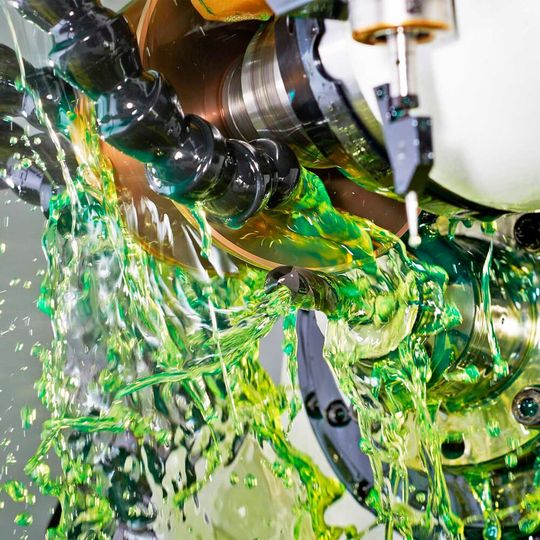
:quality(80)/p7i.vogel.de/wcms/6b/b4/6bb456c148f06af9d65155da63665c22/0129102929v1.jpeg "Thanks to a dual spindle, hybrid machines can grind PCD tools (top) and erode them (bottom) in a single set-up, increasing efficiency in terms of both time and quality. (Source: Vollmer Werke Maschinenfabrik)")
:quality(80)/p7i.vogel.de/wcms/49/47/4947b843c01af2530f6ee7b1ead12615/0128496364v1.jpeg "Elastic bonded diamond tools demonstrate their strengths wherever extremely hard materials such as carbide need to be machined with precision. (Source: Artifex)")