


:quality(80)/p7i.vogel.de/wcms/d2/63/d26376330f084c718f9ab83fc66eb39f/0129319680v1.jpeg "Situation in mechanical engineering: VDMA Chief Economist Dr. Johannes Gernandt looks back on the past year, with a particular focus on December: “Given the recent developments, we expect a slight increase in 2026. Sentiment is improving, but there is no reason for celebration.” (Source: VDMA / Sarah Kastner Fotografie)")
:quality(80)/p7i.vogel.de/wcms/4f/a9/4fa94db21a092a12fdb0822e3d5c8150/0129504798v1.jpeg "Riccardo Rosa, president of Ucimu, pointed out: “The overall outcome of the order collection regarding 2025 is in line with that of the last two years and thus disappointing once again”. (Source: Ucimu/ Ruggiero Scardigno)")
:quality(80)/p7i.vogel.de/wcms/8d/b7/8db71c3fe25cd48399bfd8faaa5e90f7/0129228188v1.jpeg "The Contract Manufacturing Index shows the value of the market for contract and subcontract manufacturing services for machining, fabrication, and other processes. (Source: Qimtek)")
:quality(80)/p7i.vogel.de/wcms/fc/44/fc4431baf22faf49f91d695e7725b0de/0129227575v2.jpeg "Rejlek Group has commissioned a Sumitomo (SHI) Demag Intelect 130 with integrated SAM-C robot in Vienna, advancing energy-efficient, high-precision and sustainable injection moulding production. (Source: Sumitomo (SHI) Demag )")
:quality(80)/p7i.vogel.de/wcms/d5/95/d5954dbd50e0262743b46bdc6d6734f8/0129685950v2.jpeg "Industry players praise the special user benefits as well as the unique spirit of this practical trade fair with its lively atmosphere. (Source: P.E. Schall)")
:quality(80)/p7i.vogel.de/wcms/af/56/af56bd4ae5b0e079ca69c244525b2cd1/0129646105v2.jpeg "This year’s expo cluster not only reflects the strong position of the Metal trade fair but also marks the debut of the Nonferra and the premiere of the Filvent Expo. (Source: Targi Kiecle)")
:quality(80)/p7i.vogel.de/wcms/ba/ea/baea897f2d161c46f0872c77cd26fb6b/0129039787v1.jpeg "The momentum of smart manufacturing is accelerating – TMTS 2026 showcases Taiwan's industrial strength. (Source: TMTS)")
:quality(80)/p7i.vogel.de/wcms/a6/06/a606d5e06236baca21d7f53019dedf42/0129504701v1.jpeg "Vomat filters clean in full flow and separate dirty and clean oil 100 percent. (Source: Vomat)")
:quality(80)/p7i.vogel.de/wcms/63/53/6353c75a9072fc20846b40065c12f724/0129533055v1.jpeg "Industrial connectors operate at critical interfaces in automated production, where reliability under vibration, heat and contaminants directly affects uptime and maintenance effort. (Source: Mencom)")
:quality(80)/p7i.vogel.de/wcms/b7/e0/b7e0832ad0be13fb559a7028f2ef02c7/0129386806v2.jpeg "(Source: Husky)")
:quality(80)/p7i.vogel.de/wcms/5d/3c/5d3cd553a019b4033e441e61f98b23d6/0129229293v1.jpeg "Featured also will be the Roemheld Moduhub equipment range, designed to help operators handle heavy or awkward components safely and efficiently during manual assembly. It also has the facility to feed back production data. (Source: Roemheld)")
:quality(80)/p7i.vogel.de/wcms/82/e7/82e72d20cefdef73713b584312be57d0/0129209599v2.jpeg "Asim Spahović, Hasco (third from left), in discussion with BSI customers Erwin Bekto, Redžo Bekto and Mehmed Šehić (from left to right). (Source: Hasco)")
:quality(80)/p7i.vogel.de/wcms/e4/6a/e46a1dab4065fa3aa0343d8243cd8615/0129665716v1.jpeg "According to Wohlers Report 2026, global AM revenues reached 24.2 billion dollars in 2025. (Source: ASTM International)")
:quality(80)/p7i.vogel.de/wcms/3e/61/3e61ccb050c57809ce8f7cde582ef4c2/0129679889v1.jpeg "The Equator-X dual-method gauging system brings unique capability to the shop floor with its dual measurement functionality. (Source: Renishaw)")
:quality(80)/p7i.vogel.de/wcms/ae/7c/ae7cfa25bd4cbdee97cf91514a80a569/0129333424v1.jpeg "Formnext 2026 strengthens industry focus with UK as partner country. (Source: Mesago/ Marc Jacquemin)")
:quality(80)/p7i.vogel.de/wcms/50/7e/507e92bc6eb96c6646801c23695fd698/0128867905v2.jpeg "Branding plate for Alstom trains produced in series. (Source: Replique )")
:quality(80)/p7i.vogel.de/wcms/21/1b/211b0274a9a8ee51eb7d39767a632837/0129639547v1.jpeg "DMG Mori’s deep hole drilling technology cycle deskills a machining process that previously required an experienced operator. (Source: DMG Mori)")
:quality(80)/p7i.vogel.de/wcms/69/59/6959edab3090fb6cf478998605b90f26/0129542165v1.jpeg "Hurco’s stand was busy throughout the three days at Southern Manufacturing & Electronics 2026. (Source: Hurco)")
:quality(80)/p7i.vogel.de/wcms/c8/43/c843d8084b4db01b20506a3773a8e56d/0129505472v2.jpeg "Viking Precision Engineers has invested in four Yamazaki Mazak Quick Turn 250 lathes. (Source: Keith Mindham/ Mazak)")
:quality(80)/p7i.vogel.de/wcms/6e/48/6e487ebc4e8332824f45a9174a171a4c/0129666289v1.jpeg "“For CNC processes you’re talking millions of points — you can’t teach a robot that; you need CAM,” recalls managing director Lander Debruyne. (Source: Ency)")
:quality(80)/p7i.vogel.de/wcms/96/16/9616c2fc580d720e8b3f91bbffcc5a01/0129504787v1.jpeg "Hummingbird MES offers real time insight into machine performance. (Source: Open Mind)")
:quality(80)/p7i.vogel.de/wcms/9b/5d/9b5db33353f3e5a256e2f634ddc349c7/0129333056v1.jpeg "Browser-based simulation results showing improved cooling times after accepting SimForm's automated channel recommendations. (Source: Machine Works)")
:quality(80)/p7i.vogel.de/wcms/0a/e1/0ae1b7a9cc45bf10ebcbce27be707eda/0129230371v1.jpeg "Vericut Optimizer is a standalone optimisation solution that works directly from NC code. (Source: Vericut)")
:quality(80)/p7i.vogel.de/wcms/f9/ca/f9ca9cace88200a5ec0946f193264963/0129209504v1.jpeg "Neil Taylor, who has worked in the toolroom at Pre-Met for 20 years. (Source: Pre-Met)")
:quality(80)/p7i.vogel.de/wcms/2f/61/2f61dd20be68049fa2320a2e5aa860d7/0123789183v2.jpeg "from left to right: Sodick President Giuseppe Addelia and Vice President Salvatore Cocco (Source: Sodick)")
:quality(80)/p7i.vogel.de/wcms/c5/49/c54973f28495dada1c7605f913717341/0121533734v1.jpeg "The set-up of the complex parts on the new Sodick ALC600G (Source: Sodick)")
:quality(80)/p7i.vogel.de/wcms/94/8f/948f81f46645691d1d90152ef605a0ae/0120806008v2.jpeg "Some of the billets clamped and ready for lights out machining at Bellcliffe. (Source: ETG)")
:quality(80)/p7i.vogel.de/wcms/46/85/46854ab7a2679db67354f556f2bc1db9/0129539660v2.jpeg "Nikon Eclipse MA200 LED is an inverted microscope with reflected illumination that is ideal for inspecting industrial parts. (Source: Nikon)")
:quality(80)/p7i.vogel.de/wcms/88/a2/88a2be18834640f6e34db6bcaa98da06/0129504771v1.jpeg "The new Ready Corex 250 industrial X-ray CT system from LK Metrology is designed for inspection and measurement on the shop floor. (Source: LK Metrology)")
:quality(80)/p7i.vogel.de/wcms/04/3d/043d3f95c300d98d7188d2c2f0673aa5/0129365083v1.jpeg "The extremely high demands placed on manufacturing precision in high-tech industries include the cleanliness of components. These sometimes extremely strict requirements call for appropriately designed cleaning processes and systems as well as a suitable manufacturing environment. (Source: Ecoclean)")
:quality(80)/p7i.vogel.de/wcms/c0/37/c037359c39028ff19aeb84bb7f6d6b9f/0129665312v1.jpeg "The new Kemmler KSG600 conveniently houses inductive heating and air cooling in one highly controllable workstation. (Source: Kemmler)")
:quality(80)/p7i.vogel.de/wcms/8b/54/8b54feb68d4c545e53445acd0f4ad451/0129553957v1.jpeg "Data-based monitoring of cooling lubricants links process chemistry and machine data to stabilise grinding quality, reduce energy consumption and enable more efficient, sustainable production. (Source: free licensed)")
:quality(80)/p7i.vogel.de/wcms/4a/3e/4a3ee5cd13d05629db9d3e88aa22ff01/0129103256v1.jpeg "Full-flow microfiltration to 3 to 5 µm, demand-based backwashing, precise temperature control, and modular system architecture make the cooling lubricant peripherals a real performance factor for the entire production chain. (Source: Vomat)")
:quality(80)/p7i.vogel.de/wcms/6b/b4/6bb456c148f06af9d65155da63665c22/0129102929v1.jpeg "Thanks to a dual spindle, hybrid machines can grind PCD tools (top) and erode them (bottom) in a single set-up, increasing efficiency in terms of both time and quality. (Source: Vollmer Werke Maschinenfabrik)")
:quality(80)/p7i.vogel.de/wcms/66/52/6652eb3a653a0908d5b03fb638f16260/0129646074v2.jpeg "The powerful EVO42 turbine with throwing blades made from hardened tool steel is ideally suited for the harsh conditions in foundries (Source: Rösler Oberflächentechnik)")
:quality(80)/p7i.vogel.de/wcms/57/9c/579c8e2bcff2e800a19fcb0926e574fa/0129056117v1.jpeg "Fortis mill grinding wheels from weiler abrasives are designed for hot and cold rolling mills, combining advanced ceramic grain technology with longer service life to reduce downtime and increase productivity. (Source: Weiler Abrasives)")
:quality(80)/p7i.vogel.de/wcms/4a/5f/4a5fd6bde5784db58812f15386c2126f/0126112832v2.jpeg "Boride Engineered Abrasives offers mould makers worldwide a complete toolkit for achieving top-quality surface finishes. (Source: Boride)")
:quality(80)/p7i.vogel.de/wcms/6b/9c/6b9cab1e262f77caed8179ed3dc29807/0129104421v1.jpeg "GMH Gruppe has consolidated Kind & Co., Schmiedewerke Gröditz and Buderus Edelstahl into a unified Open-Die Forging Group, supported by a 30 million euro investment programme to strengthen Europe-based tool steel and forging supply. (Source: Oliver Pracht/ GMH Gruppe)")
:quality(80)/p7i.vogel.de/wcms/49/58/4958084fe5c4ed0a7758f7cfb3051e92/0128854986v1.jpeg "Intelligent material procurement connects components, materials, and processes into one seamless flow. (Bild: FACTUREE - The Online Manufacturer)")
:quality(80)/p7i.vogel.de/wcms/39/a3/39a32d830d6bb6e4471c79e537c5ca52/chimei-ecologue-frosch-6000x3373v1v1.jpeg "The green frog represents the Ecologue portfolio at CHIMEI. It reflects the company's commitment to innovation, safety, and sustainability – aiming to drive progress in various industries while also contributing to addressing global environmental challenges. (Image:CHIMEI)")
:quality(80)/p7i.vogel.de/wcms/2b/29/2b297a2773f13d3017fc6d49424a57b1/0127570680v1.jpeg "Dr Aphrodite Tomou heads up the technical department of Goodfellow (Source: Goodfellow)")
:quality(80)/p7i.vogel.de/wcms/8b/8d/8b8db0a97eb1239cbbb61059ec5ab72f/0129661137v1.jpeg "Ben Mechelmans, Managing Director of Arburg N.V. in Belgium since 1 January 2026. (Source: Arburg)")
:quality(80)/p7i.vogel.de/wcms/0a/5c/0a5c9d0ec1ed36e089efc5720b03652c/0129646071v1.jpeg "Steve Thomson has been Managing Director of Arburg Ltd. in Warwick since 1 December 2025. (Source: Arburg)")
:quality(80)/p7i.vogel.de/wcms/e8/42/e8420aac00eff6b06cfa52168be1b59e/0129638993v1.jpeg "Vigel is one of the pioneers in the design and manufacture of multi-spindle machining centers. (Source: Vigel)")
:quality(80)/p7i.vogel.de/wcms/07/fd/07fd8752b8d884ee69baba1b2207d82d/0129373572v1.jpeg "This is the new leadership team taking over at Meusburger in Wolfurt. From left to right: Simon Köb, Head of Sales and Marketing; the new CEO, Stefan Kraxner; and Tobias Fuchs, responsible for Finance and central functions. (Source: Meusburger/ Studio Fasching)")
Hot Runners Greater productivity in tool and mould making through standardisation
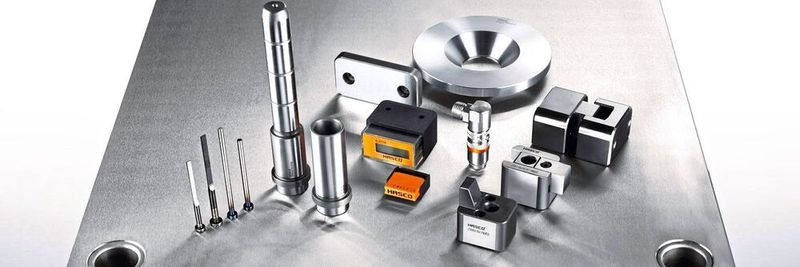
Standardised high-quality mould units provide a reliable basis for modern mould- and toolmaking. This was reason enough for Schoform, a German mould and toolmaking company based in eastern Saxony, to opt for standard mould units from Hasco for the last 20 years. The latest example is a 32-cavity hot runner mould, for which Hasco supplied the complete, ready-to-assemble “hot half” as well as most of the associated standardised components.
Related Vendors
:fill(fff,0)/p7i.vogel.de/companies/66/0e/660e93698db24/hasco-logo-or-b50.jpeg "hasco-logo-or-b50 (HASCO)")
:fill(fff,0)/images.vogel.de/vogelonline/companyimg/125700/125705/65.jpg "LOG_ENT_Meusburger-M-s-dxf_#SALL_#AMS_#V1.jpg ()")
Since 2002, Schoform, which is based in Demitz-Thumitz near Bautzen/Germany, has been building and supplying injection moulding tools for thermoplastics and thermosets as well as compression moulds for thermosets. With a workforce of 21, the company produces around 50 moulding tools a year for customers in electrical engineering, electrical installation and the automotive industry.
Schoform has so far been able to cope well with the special challenges of the coronavirus crisis, and is seeing renewed demand for its thermoset products. “Not many companies nowadays have them in their portfolio,” says managing shareholder Dirk Scholze. “The field was in constant decline a few years ago, but is now coming back strongly again.”
From the very beginning, Schoform has opted for standard mould units from Hasco, the Lüdenscheid/Germany-based full service provider of standardised quality mould units. “We have enjoyed very good cooperation with Hasco for many years,” says managing director Alexander Thiel, a mechanical engineer who started with Schoform as a construction engineer in 2002. He is firmly convinced of Hasco’s value as a trusted supplier: “Whether we are talking about standard mould units or customised components, the quality of the products is always outstanding.”
:quality(80)/images.vogel.de/vogelonline/bdb/1834400/1834478/original.jpg "(Schoform)")
:quality(80)/images.vogel.de/vogelonline/bdb/1834400/1834479/original.jpg "(Hasco)")
:quality(80)/images.vogel.de/vogelonline/bdb/1834400/1834480/original.jpg "(Hasco)")
:quality(80)/images.vogel.de/vogelonline/bdb/1834400/1834481/original.jpg "(Hasco)")
32-cavity hot-runner mould is one of the most complex recent jobs
One of the largest and most complex projects that Schoform has handled recently is a 32-cavity hot runner mould with needle valve for producing elastic inserts from a TPE material. The customer, Schneider Electric, uses the inserts to seal the cable conduit in wall-mounted electrical junction boxes. The moulding tool is designed for 24/7 operation and guarantees at least a million shots.
In Hasco, Schoform again found a partner that was able to cover the entire spectrum of services, not only in an advisory capacity and in initial system design, but also in technical coordination during mould design and then in the production and special processing. “And Hasco delivered that with a cost/benefit/quality ratio that other suppliers were unable to match,” says Alexander Thiel. “We were particularly fortunate that we, as a mould and tool manufacturer, were able to pass on to Hasco a good deal of the responsibility for technical communication with the customer.”
:quality(80)/images.vogel.de/vogelonline/bdb/1827500/1827563/original.jpg "The 64-cavity mould for production of the syringe barrel. The cavities are arranged in circles around radial hot runner nozzles. (Werkzeugbau Ruhla)")
Hot Runners
Modular mould design concept for lightweight syringes
In this respect, Alexander Thiel adds, there was an intensive exchange of ideas and experience between the Hasco technical service department and Schneider Electric, which reinforced the customer’s decision to order the mould from Schoform. An important point in the entire decision-making process was also that Hasco was able to offer and supply the hot half with the relevant guarantees.
Finally, the mould was then made up from 95 percent Hasco components, from the ready-drilled K-plates and broad range of Z-standards to the DLC-coated ejector elements that ensure a long service life for the finished mould. In addition, Hasco’s online Mould Base Assistant is an enormous help at the design stage: “A super-tool,” says Alexander Thiel, “simple and intuitive to operate. And you always have the latest available standard units to hand.”
With such support, Schoform was able to concentrate on its strengths and carry out the precision machining in its own modern machinery pool. “We merely provided support through machining steps such as deep-hole drilling in Hasco’s Special Machining Center (SMC) without competing with the customer,” said Stephan Wendt, Mould Base technical sales engineer.
Schoform also took advantage of a number of components offered exclusively by Hasco. For example, the Z9675 diverting plug enables the conformal positioning of cooling holes in areas where ejectors are located, to provide significantly more effective temperature control.
Smooth assembly and commissioning
The complete hot half was supplied as a ready-to-mount subassembly with the support of Tobias Kröber, a technical sales engineer in Hasco’s hot runner department. It is compatible with all other components in the Hasco range. “For us, this made everything extremely easy in terms of the assembly and coordination,” says Alexander Thiel. “Here again, the precision, execution and timing were outstanding. As far as the assembly was concerned, we couldn’t have imagined anything better.”
:quality(80)/images.vogel.de/vogelonline/bdb/1781200/1781291/original.jpg "The Streamrunner permits production in a very small space. (Hasco)")
Case Study: Hot Runners
Streamrunner opens door to new design possibilities
“In the collaboration with Hasco on this mould project, everything ran absolutely smoothly,” Alexander Thiel continues. “Even during the very first phase, things all worked out perfectly: the production time for the hot runner, exact adherence to the delivery times for all the standard mould units — which made it possible to deliver the mould absolutely on time — and the quality of the produced parts.” Hasco’s technical application department was also present at the sampling stage, and provided advice for startup and finding the optimum machine parameters. “We were quickly able to go direct from the first sampling to the approval and release of the mould,” says Alexander Thiel proudly. “After only a short time, nothing but good parts were coming out of the machine.”
Standardised mould units optimise added value
Schoform tries to build as much as possible on the basis of standardised Hasco mould units, not least because of the ease of obtaining spare parts. Another reason for continued cooperation with Hasco, says Alexander Thiel, is the ability to stay up to date whenever technical innovations come about. Finally, for Schoform, standardisation is a fundamental requirement nowadays to remain permanently competitive in a world with ever faster change and increasing digitalisation.
Maximum productivity is a key success factor in view of the increasing competitive pressure, and especially in economically difficult times. Standardised mould units for mouldmaking guarantee sustainable success because, when used consistently, they optimise the entire process chain. This begins at the development stage, where native CAD data from standard elements with installation spaces can easily be implemented into the design through simple drag-and-drop. “With the ready-to-assemble coordinated standard mould units, we save a considerable amount of assembly time,” Alexander Thiel explains.
Additional synergies come about through the standardisation in machining and assembly, because the required tools can be reduced to an absolute minimum. Apart from these time and cost benefits, the use of standardised construction elements also accelerates the time to market, which for many new developments is of fundamental importance. In plastics processing, standard units that have proven themselves thousands of times guarantee maximum safety and reliability in production.
During a scheduled maintenance turnaround, or in the event of wear and tear or a defect, the standardised mould units can be repaired quickly, thus cutting downtime to a minimum.
Schoform increases its productivity
Schoform managing shareholder Dirk Scholze says: “The orders for moulding tools we receive here in the easternmost point of Germany generally involve very demanding and complex projects. They entail a comparatively large amount of coordination, so our excellent cooperation with Hasco makes it possible for us to meet the customers’ stringent requirements.”
:quality(80)/images.vogel.de/vogelonline/bdb/1821100/1821121/original.jpg "Hasco’s cooling system celebrates its 50th birthday. (Hasco)")
Cooling for mouldmaking
Half a century of “cool” technology
This mould for TPE components in a junction box is only one example of Schoform’s many products for the electrical installation segment. The company also supplies sophisticated injection moulding tools for the automotive industry, although Alexander Thiel says this segment has become very much quieter in recent years. “We used to have mainly orders for diesel components,” adds Dirk Scholze, “including charge air pipes and Adblue filling systems. The trend now, of course, is towards alternative propulsion systems such as electric vehicles.” The company’s automotive portfolio now also includes moulds for interior components such as window handles and door liners. It also often happens that Schoform helps customers design their applications to suit the mould.
Full service provider for mouldmaking
With more than 100,000 products under one roof, Hasco is a full service provider for mould and toolmaking. Its portfolio of high-quality standard mould units, built up according to a modular system and perfectly coordinated to the needs of the customers, increases its competitiveness on a lasting basis. One of Hasco’s basic principles is to offer not as much as possible but as much as necessary. To make it easy for customers to build high-quality moulds, Hasco supplies the right product and material combination for every application.
(ID:47295352)
:quality(80)/p7i.vogel.de/wcms/70/62/7062559d37e7a114838fc5b1ffe6b0e9/0123522868v1.jpeg "The Streamrunner represents a major leap forward in hot runner technology. (Source: Hasco)")
:quality(80)/p7i.vogel.de/wcms/52/50/52501d3db550e5231c7ea9a580c95693/0124140087v1.jpeg "The RFID chip can be read out at any time without contact using an NFC-capable end unit. (Source: Hasco)")