


:quality(80)/p7i.vogel.de/wcms/bb/74/bb74aefce7687b2ac87e62f6a52cf67e/0130170106v1.jpeg "Incoming orders for the German machine tool industry (Source: VDW)")
:quality(80)/p7i.vogel.de/wcms/73/8a/738a9f20229e20ae938c5e690b37a5df/0129780274v1.jpeg "With the acquisition of Knudsen Plast, MGS expands its European cleanroom injection moulding capacity and strengthens regional support for pharma, diagnostics and MedTech customers. (Source: MGS)")
:quality(80)/p7i.vogel.de/wcms/d2/63/d26376330f084c718f9ab83fc66eb39f/0129319680v1.jpeg "Situation in mechanical engineering: VDMA Chief Economist Dr. Johannes Gernandt looks back on the past year, with a particular focus on December: “Given the recent developments, we expect a slight increase in 2026. Sentiment is improving, but there is no reason for celebration.” (Source: VDMA / Sarah Kastner Fotografie)")
:quality(80)/p7i.vogel.de/wcms/4f/a9/4fa94db21a092a12fdb0822e3d5c8150/0129504798v1.jpeg "Riccardo Rosa, president of Ucimu, pointed out: “The overall outcome of the order collection regarding 2025 is in line with that of the last two years and thus disappointing once again”. (Source: Ucimu/ Ruggiero Scardigno)")
:quality(80)/p7i.vogel.de/wcms/61/7e/617ef318532138a416269fc434fafdbe/0130476562v2.jpeg "Rethinking Plastic will include 30 sessions with a hundred speakers and twenty entities from the plastic ecosystem. (Source: Fira Barcelona)")
:quality(80)/p7i.vogel.de/wcms/46/8b/468bb069d724e58d0131ed8ccbbc9f4b/0130460078v1.jpeg "Packed halls at TMTS 2026. (Bild: VCG/Sonnenberg)")
:quality(80)/p7i.vogel.de/wcms/79/53/795301ea6a776278189e2a019ba94390/0130415594v1.jpeg "To mark its 30th edition, Fakuma 2026 is launching the new Fakuma Innovation Award to honour technological excellence, innovation and teamwork across the plastics processing value chain. (Source: P.E. Schall)")
:quality(80)/p7i.vogel.de/wcms/95/86/9586c977cea778fd4714d8affe2ad482/0130104571v1.jpeg "Special area Automation + Turnkey at Arburg Technology Days 2026 (Source: Arburg)")
:quality(80)/p7i.vogel.de/wcms/09/0c/090ccfc5b48898dac74feabbbdf0aeae/0130423312v2.jpeg "Despite the challenging economic climate, Meusburger has strengthened its position as a reliable partner for making moulds, dies, jigs and fixtures. (Source: Meusburger)")
:quality(80)/p7i.vogel.de/wcms/1a/7c/1a7c4259282a4190e5068a9f4b05eb01/0130100449v1.jpeg "(Source: Hasco)")
:quality(80)/p7i.vogel.de/wcms/aa/21/aa2113aa2a9bb9c5937e2f930a5dd344/0129966928v1.jpeg "With the launch of the exclusive Push-Lok System Ø5 and an expanded Cooling System Ø5, Hasco broadens its range of components for precise and efficient mould cooling. (Source: Hasco)")
:quality(80)/p7i.vogel.de/wcms/63/53/6353c75a9072fc20846b40065c12f724/0129533055v1.jpeg "Industrial connectors operate at critical interfaces in automated production, where reliability under vibration, heat and contaminants directly affects uptime and maintenance effort. (Source: Mencom)")
:quality(80)/p7i.vogel.de/wcms/d8/79/d879b046ea1475ff1172e9cb2563597e/0130247463v1.jpeg "The comparison between the SLA-printable plastics Accura Xtreme Grey (top) and the robust newcomer Accura Xtreme Black now used by Speedpart, which represents a cost-effective and deep-black alternative to mechanically machined plastic prototypes ... (Source: Speedpart)")
:quality(80)/p7i.vogel.de/wcms/37/2a/372a7d6fbc1aee547d87f91f925a5cc6/0130240729v2.jpeg "An SEM image of another nickel nano-architecture fabricated by the Greer lab (scale bar = 5 microns). This example is a spinodal-like nano-architecture. Box I shows a zoomed in view of the 2 micron x 2 micron dashed area in H. Box J features a CAD model based on the SEM image. (Source: Greer Lab/ Caltech)")
:quality(80)/p7i.vogel.de/wcms/40/0f/400f998c1d2d311ee8f468d8b8641b11/0130234739v1.jpeg "Rapid Fusion and Aivox join forces to bring large-format additive manufacturing to the Italian market. (Source: Aivox)")
:quality(80)/p7i.vogel.de/wcms/87/4c/874ca652c72c1f77ed527f997cbb67f0/0130187262v3.jpeg "Heat Exchanger for Blood Cooling — 3D Printed on the S150 in 1 hour, 18 min (Source: Boston Micro Fabrication)")
:quality(80)/p7i.vogel.de/wcms/db/58/db585f01f7d7c5503342feb6e2d17260/0130364195v1.jpeg "Automated Tool Production: Walter’s comprehensive solution for fully automated tool production. (Source: Walter Machines)")
:quality(80)/p7i.vogel.de/wcms/63/4e/634e7417e7849078dc12e6809cb48220/0130363483v1.jpeg "The new DMF 600|11 XXL travelling-column machining centre from DMG Mori. (Source: DMG Mori)")
:quality(80)/p7i.vogel.de/wcms/8e/bd/8ebd4cee7301e92908136aed3527bd35/0130093383v1.jpeg "Customized milling head of the FZ40c (Source: Zimmermann)")
:quality(80)/p7i.vogel.de/wcms/07/59/0759647a6e5c008648499947f03de4f0/0130086243v1.jpeg "Bruderer UK will premiere the BSTA 280-88-B3 with the new B3 control system at Mach 2026. (Source: Bruderer UK)")
:quality(80)/p7i.vogel.de/wcms/62/0d/620d63746a132b3d59f37c3bc2d13d90/0130422909v1.jpeg "Ency supports DAMRC in linking robot programming with kinematic analysis and process preparation for robotic machining research. (Source: Ency)")
:quality(80)/p7i.vogel.de/wcms/ac/ff/acffde689ec28e78eec957d4a0813dda/0130382745v1.jpeg "Visitors were able to see live cutting demonstrations on a Star SP23, showcasing how Solidcam drives high performance machining on advanced Sliding Head (Swiss-Type) technology. (Source: Solidcam)")
:quality(80)/p7i.vogel.de/wcms/90/46/9046974d34d72d06aa7966a3751d4a40/0130241270v1.jpeg "The Wittmann Group has optimized the “WiAssist” app to make it even easier for injection moulding practitioners to save time ... (Source: Wittmann Group)")
:quality(80)/p7i.vogel.de/wcms/22/eb/22ebb8826d0175c65e0ff4b96a3ee27a/0130186157v1.jpeg "Simcon’s new Cadmould AI Solver delivers injection molding simulation results in seconds. By removing lengthy computation times, the tool enables engineers to dynamically explore thousands of design and process variations in a single day. (Source: Business Wire/ Simcon)")
:quality(80)/p7i.vogel.de/wcms/d5/1d/d51def0b31e213e756bbfb9479fa9c7e/0129925621v2.jpeg "Automatic electrode feeding: Together with Sodick and Erowa, the Robot Compact 80 (ERC80) was integrated — including connection to the Zeiss measuring machine and chip-based job management. (Source: Sodick)")
:quality(80)/p7i.vogel.de/wcms/f9/ca/f9ca9cace88200a5ec0946f193264963/0129209504v1.jpeg "Neil Taylor, who has worked in the toolroom at Pre-Met for 20 years. (Source: Pre-Met)")
:quality(80)/p7i.vogel.de/wcms/2f/61/2f61dd20be68049fa2320a2e5aa860d7/0123789183v2.jpeg "from left to right: Sodick President Giuseppe Addelia and Vice President Salvatore Cocco (Source: Sodick)")
:quality(80)/p7i.vogel.de/wcms/c5/49/c54973f28495dada1c7605f913717341/0121533734v1.jpeg "The set-up of the complex parts on the new Sodick ALC600G (Source: Sodick)")
:quality(80)/p7i.vogel.de/wcms/53/c7/53c73ae0a157d4c103e1964e77c1f425/0130023300v1.jpeg "The LK Altera M 20.12.10 CMM at Action Plas Group in Pudsey supports the inspection of high-value machined and additively manufactured components. (Source: LK Metrology)")
:quality(80)/p7i.vogel.de/wcms/68/ab/68abf66929cb9f2dcb823a12e90d1d21/0129922525v1.jpeg "The blast nozzles, placed at the top and bottom of a vertical linear shuttle unit, can be moved up/down and individually turned on or off. (Source: Rösler Oberflchentechnik)")
:quality(80)/p7i.vogel.de/wcms/46/85/46854ab7a2679db67354f556f2bc1db9/0129539660v2.jpeg "Nikon Eclipse MA200 LED is an inverted microscope with reflected illumination that is ideal for inspecting industrial parts. (Source: Nikon)")
:quality(80)/p7i.vogel.de/wcms/3e/61/3e61ccb050c57809ce8f7cde582ef4c2/0129679889v1.jpeg "The Equator-X dual-method gauging system brings unique capability to the shop floor with its dual measurement functionality. (Source: Renishaw)")
:quality(80)/p7i.vogel.de/wcms/51/3e/513e2d937e96401a4d1ff8db1481cce7/0130242596v1.jpeg "With the GC1240 insert grade, Sandvik Coromant is bringing to the machining world a solution featuring a special coating that makes the tooling system significantly more wear-resistant and boosts productivity ... (Source: Sahdvik Coromant)")
:quality(80)/p7i.vogel.de/wcms/f8/8f/f88f47ba8e4ef50152497010c25dda11/0130168360v1.jpeg "At Grinding Hub, in Hall 7, Booth 7D80, Vomat will showcase high-performance microfiltration solutions for coolant, specifically designed for demanding metalworking applications such as tool grinding. (Source: Vomat)")
:quality(80)/p7i.vogel.de/wcms/3a/77/3a771c3954be7ad9129b7ec46114bd9c/0130022902v1.jpeg "Roemheld’s new B 1.8270 hydraulic workholding unit with patented kinematics. (Source: Roemheld)")
:quality(80)/p7i.vogel.de/wcms/fe/19/fe195d611d459acab868678ba6916958/0129831781v1.jpeg "The Emag UG Series at a glance: UG 400, UG 630, UG 1000 and UG 1500 cover grinding lengths from 400 to 1,500 mm. (Source: Emag)")
:quality(80)/p7i.vogel.de/wcms/66/52/6652eb3a653a0908d5b03fb638f16260/0129646074v2.jpeg "The powerful EVO42 turbine with throwing blades made from hardened tool steel is ideally suited for the harsh conditions in foundries (Source: Rösler Oberflächentechnik)")
:quality(80)/p7i.vogel.de/wcms/04/3d/043d3f95c300d98d7188d2c2f0673aa5/0129365083v1.jpeg "The extremely high demands placed on manufacturing precision in high-tech industries include the cleanliness of components. These sometimes extremely strict requirements call for appropriately designed cleaning processes and systems as well as a suitable manufacturing environment. (Source: Ecoclean)")
:quality(80)/p7i.vogel.de/wcms/57/9c/579c8e2bcff2e800a19fcb0926e574fa/0129056117v1.jpeg "Fortis mill grinding wheels from weiler abrasives are designed for hot and cold rolling mills, combining advanced ceramic grain technology with longer service life to reduce downtime and increase productivity. (Source: Weiler Abrasives)")
:quality(80)/p7i.vogel.de/wcms/4a/5f/4a5fd6bde5784db58812f15386c2126f/0126112832v2.jpeg "Boride Engineered Abrasives offers mould makers worldwide a complete toolkit for achieving top-quality surface finishes. (Source: Boride)")
:quality(80)/p7i.vogel.de/wcms/d5/e6/d5e68c74fabff18ef737ee767b7b359f/0130415707v1.jpeg "Efficiency in machining and a reduced carbon footprint will be at the centre of Swiss Steel Group’s presentation at Wire 2026 in Düsseldorf. (Source: Swiss Steel Group)")
:quality(80)/p7i.vogel.de/wcms/6b/9c/6b9cab1e262f77caed8179ed3dc29807/0129104421v1.jpeg "GMH Gruppe has consolidated Kind & Co., Schmiedewerke Gröditz and Buderus Edelstahl into a unified Open-Die Forging Group, supported by a 30 million euro investment programme to strengthen Europe-based tool steel and forging supply. (Source: Oliver Pracht/ GMH Gruppe)")
:quality(80)/p7i.vogel.de/wcms/49/58/4958084fe5c4ed0a7758f7cfb3051e92/0128854986v1.jpeg "Intelligent material procurement connects components, materials, and processes into one seamless flow. (Bild: FACTUREE - The Online Manufacturer)")
:quality(80)/p7i.vogel.de/wcms/39/a3/39a32d830d6bb6e4471c79e537c5ca52/chimei-ecologue-frosch-6000x3373v1v1.jpeg "The green frog represents the Ecologue portfolio at CHIMEI. It reflects the company's commitment to innovation, safety, and sustainability – aiming to drive progress in various industries while also contributing to addressing global environmental challenges. (Image:CHIMEI)")
:quality(80)/p7i.vogel.de/wcms/cb/69/cb697733e36638cb14ce98d5e11df557/0130474188v1.jpeg "Modiform is ending the activities of subsidiary Thomsen in Northern France. (Source: Modiform)")
:quality(80)/p7i.vogel.de/wcms/23/c2/23c213848bec7ea6ffaa4cec36d550d5/0130424512v1.jpeg "Tactotek and Acad group have partnered to accelerate the development and prototyping of IMSE-based smart surfaces. (Source: Tactotek)")
:quality(80)/p7i.vogel.de/wcms/17/82/17821b5308c069aba2f9cbba9df405ec/0130415575v1.jpeg "John Fini will assume the role of President of Krauss Maffei Corporation on June 1, 2026, succeeding Brett Greenhalgh as part of an internal leadership transition. (Source: Krauss Maffei )")
Styrenic Polymers Styrenics files EU authorisation for mechanically recycled polystyrene as food contact material
Belgium — The value chain initiative to realise the circular economy for styrenic polymers, Styrenics Circular Solutions (SCS), has filed its second application for EU authorisation of mechanically recycled polystyrene (rPS) as food contact material. SCS has now already two submissions to be assessed by the European Food Safety Authority (Efsa).
Related Vendors
:fill(fff,0)/p7i.vogel.de/companies/66/0e/660e93698db24/hasco-logo-or-b50.jpeg "hasco-logo-or-b50 (HASCO)")
:fill(fff,0)/images.vogel.de/vogelonline/companyimg/86000/86052/65.jpg "JONGEN-Logo-blau-150dpi_RGB.jpg ()")
:fill(fff,0)/images.vogel.de/vogelonline/companyimg/26200/26226/65.jpg "Logo.jpg ()")
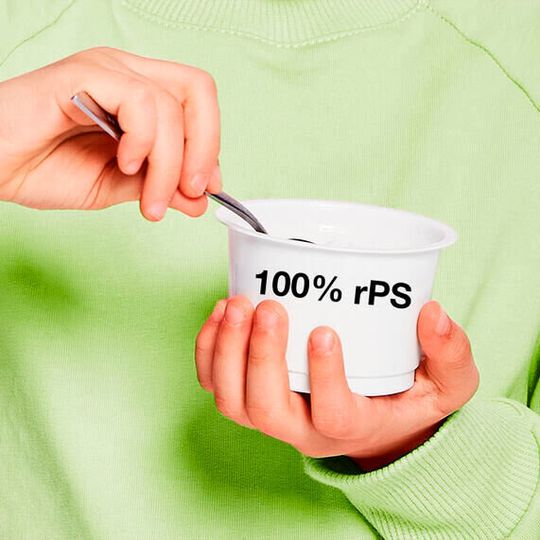
The mechanically recycled polystyrene products developed Styrenics, cover multiple end-consumer applications, including yoghurt pots, hot and cold beverage containers and food trays. However, they are based on two different super-cleaning technologies as part of PET-like food contact mechanical recycling processes. The rPS content in end-consumer applications can range up to 100 percent.
The scientific dossier by Fraunhofer IVV for this second application follows several challenge tests performed with the super-cleaning technology of plastic recycling machine manufacturer Gneuss. According to the dossier, the process consistently delivered a recycled polymer with excellent purity, based on post-consumer food packaging waste. The results were delivered by Gneuss’ Multi Rotation System (MRS) jump extrusion process that enables highly efficient super-cleaning based on high vacuum, high surface and melt temperature. Fraunhofer IVV confirmed the lent cleaning efficiency demonstrated in the challenge tests. This technology already has an established track record in Japan, where Gneuss have provided FDA approved super-cleaning for food contact mechanical recycling of food trays since 2017.
PET-like high purity mechanical recycling is one of the multiple plastic-to-plastic recycling options available for polystyrene next to dissolution and depolymerisation. PS benefits from the same inherent low-diffusion characteristic as PET, which enables mechanical recycling to food grade standards. ‘
(ID:48021020)
:quality(80)/p7i.vogel.de/wcms/25/87/25875e8f687cad30d301a3cf3396c289/0126083788v1.jpeg "Origin Materials partners with Berlin Packaging to supply sustainable PET 1881 caps for global beverage brands, aiming to improve recyclability and reduce packaging impact. (symbolic image) (Source: free licensed)")
:quality(80)/p7i.vogel.de/wcms/d1/92/d192714a0965cb5a1814d65d9fe9644d/0129104570v1.jpeg "Ineos has launched its new Recycl-IN rPP1025C grade with 70 percent recycled content, offering a drop-in polypropylene solution for sustainable contact-sensitive cosmetics packaging. (Source: Ineos)")